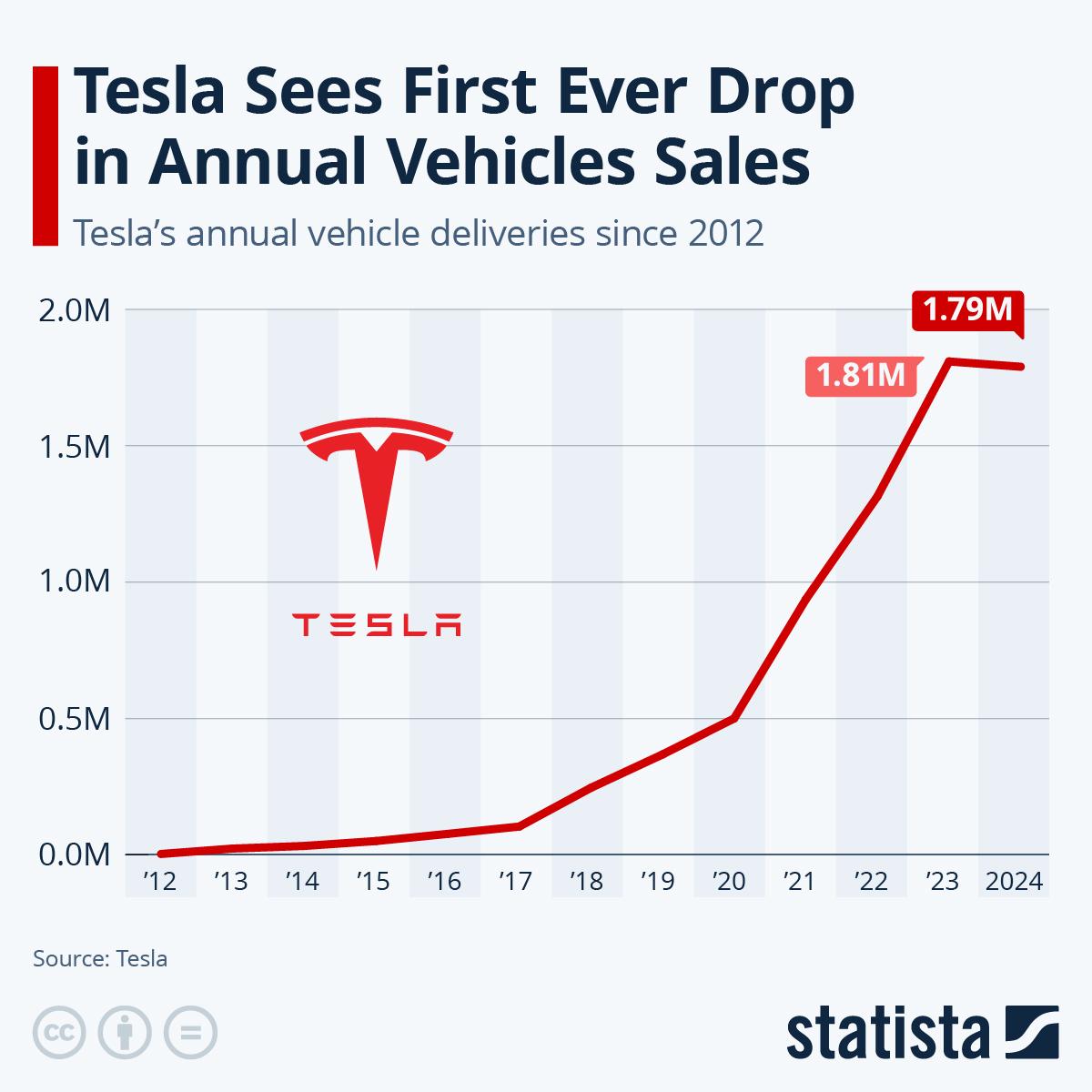
Analysts See Tesla Bracing for Rare Sales Slump
Tesla is on track for its first quarterly sales drop since 2020, as analyst forecasts point to weakening demand and rising competition.
Storm Clouds Over Austin
Inside Tesla’s sprawling headquarters, the whiteboards that usually forecast record-breaking deliveries have been wiped clean. In their place: a cautious set of numbers that, for the first time in three years, point downward. According to fresh consensus data shared with investors late Monday, Wall Street now expects the EV pioneer to ship roughly 435,000 vehicles in the June quarter—about 9 percent fewer than last year.
A Perfect Headwind
The projected dip is not born of a single scandal or recall. Instead, analysts cite a convergence of pressures: swelling inventories on U.S. lots, aggressive price cuts that have yet to stoke enough demand, and a Chinese market where local rivals BYD and Nio are eating market share faster than fresh roadster rumors circulate on Reddit.
“Tesla remains the benchmark, but the competition has finally caught up in both price and range,” said Joseph Park, senior autos analyst at Mirae Asset. “We’re watching a normalization, not a collapse, yet the optics are jarring for a growth story that has only known up.”
Margin Squeeze
Every discounted Model Y directly chips away at the fat gross margins that once cushioned Tesla’s balance sheet. In the March quarter, automotive gross margin sank to 18.5 percent, down from 25 percent a year earlier. If volumes fall as forecast, some analysts predict the metric could flirt with the mid-teens this summer—territory legacy automakers know all too well.
What Musk Is Telling Staff
During an internal town-hall last week, Elon Musk reportedly framed the lull as “a short-term breather” while the company retools assembly lines for the next-generation platform that will birth a cheaper $25,000 model. Yet line workers at the Fremont plant tell a different story: Saturday overtime shifts have quietly disappeared, and the usual summer production surge feels more like a sigh.
Investor Reaction
Shares fell 4 percent in after-hours trading once the guidance circulated, knocking the company’s market value below $500 billion for the first time since January. Options markets now imply a 9 percent swing on earnings day—double the typical volatility—suggesting traders are bracing for either a dramatic mea-culpa or a surprise delivery beat.
Looking Ahead
Tesla has weathered slowdowns before—demand vaporized during the pandemic’s early months, then roared back on the heels of government incentives. Whether this deceleration is merely cyclical or the first sign of saturation will depend on three variables:
- How quickly the company can roll out its refreshed Model 3 “Highland” in North America
- Whether Chinese consumers reward Tesla’s new zero-interest loans
- If federal EV tax-credit tweaks widen or narrow the pricing gap with competitors
The Bigger Picture
For an industry racing toward an electric future, Tesla’s stumble offers a humbling reminder: no brand, however disruptive, is immune to gravity. The next quarterly update, due in six weeks, will reveal whether today’s projected decline becomes a blip—or the prologue to a new era of slower, steadier growth.