Artemis II Countdown: NASA’s 2026 Moon Loop That Could Redefine Spaceflight
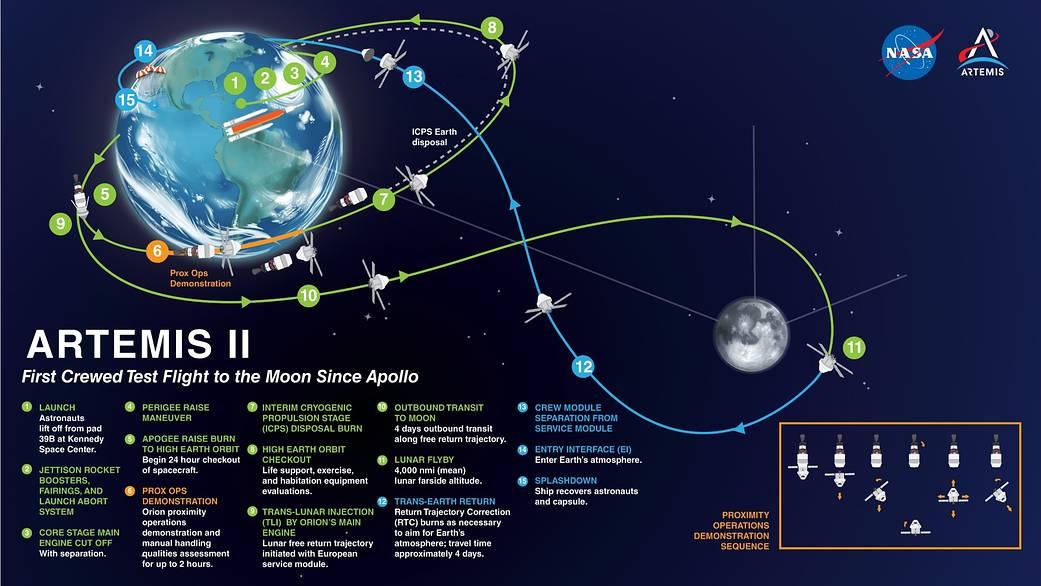
NASA’s Artemis II mission, weeks from its 2026 launch, will send four astronauts around the Moon in a high-stakes test that could decide the future of lunar exploration.
The Clock Is Ticking
Inside Kennedy’s cavernous Vehicle Assembly Building, the scent of metal and ambition hangs thick. Engineers swarm around the stripped-down core stage of NASA’s Space Launch System like surgeons over a patient, every torque spec rehearsed until muscle memory kicks in. In a few weeks they will roll the 212-foot beast to Pad 39B, light four RS-25 engines, and—if the fates allow—send four astronauts on a figure-eight around the Moon for the first time since 1972.
Why Artemis II Matters
This is not a rehearsal. Artemis II is the mission that turns blueprints into belief. Success green-lights a lunar landing later this decade; failure could ground the program for years and hand the narrative to Beijing’s surging space effort.
“If we can’t prove the life-support systems on a ten-day joyride, we’re not putting boots on the regolith—period,” a senior flight director told colleagues during a recent red-team review.
What’s New Since Apollo
- Orion’s heat shield is now forged from Avcoat blocks that shed in layers, shaving 200 kg and promising a gentler re-entry at 25,000 mph.
- Callisto, an Alexa-style AI, will let crew ask for telemetry updates in plain English, freeing them from 1,200-page checklists.
- Deep Space Network dishes have been upgraded to Ka-band, tripling data rates so 4K video of the far side can stream live to classrooms.
The Crew: Four Names, One Gamble
Commander Reid Wiseman, pilot Victor Glover, and mission specialists Christina Koch and Jeremy Hansen have spent 18 months in simulators that can mimic 2,700 failure scenarios. Their favorite escape valve? A quiet T-38 trainer flight over the Gulf, where Glover practices hand-flown formation flying—skills he’ll need if Orion’s autopilot hiccups near the Moon.
Countdown to 2026
NASA still needs three hot-fires of the redesigned upper-stage engine, a successful Orion parachute drop from 25,000 ft, and sign-off from an independent review board already jittery about cost overruns. Agency insiders say the August-September 2026 launch window is “realistic but not comfortable.” Translation: schedule margin is measured in weeks, not months.
Global Stakes
While NASA polishes Artemis, China aims for a crewed lunar landing before 2030 and has invited international payloads on its Long March 10. Europe, Japan and Canada have bet big on Gateway, the mini-station that will orbit the Moon—yet its first module won’t launch until 2027. If Artemis II stumbles, Congressional appropriators could pivot funds toward Mars or, worse, cislunar defense assets, leaving lunar science adrift.
Bottom Line
The next time the countdown reaches T-0, the world will watch more than fire and thunder. Artemis II is the hinge moment that decides whether humanity’s return to the Moon is a one-off encore or the opening chord of a lasting chorus.