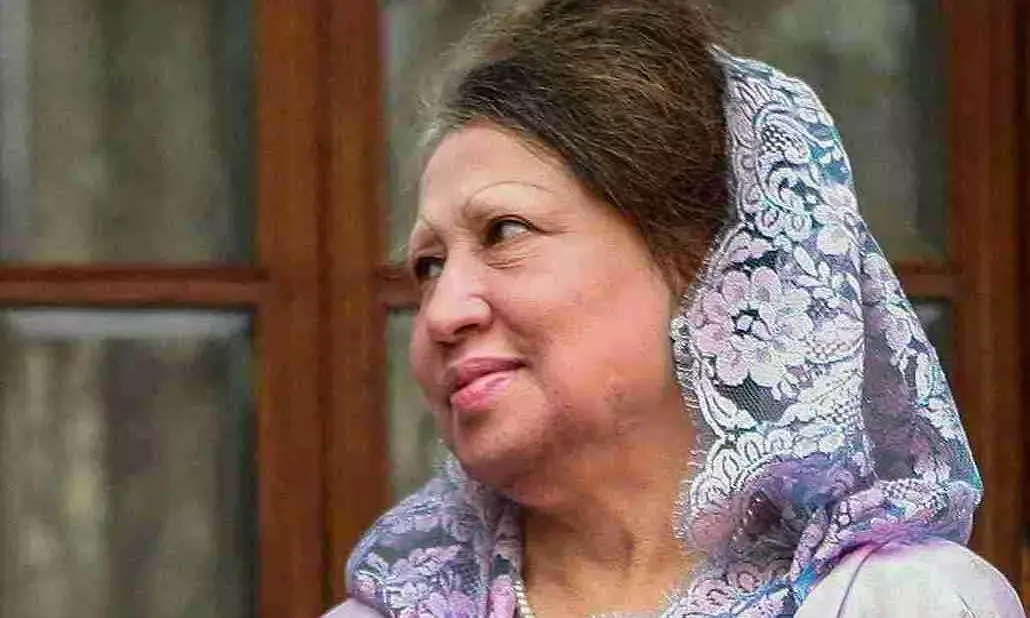
Khaleda Zia, Bangladesh’s First Female Premier, Dies at 80
Bangladesh’s first female prime minister, Khaleda Zia, dies at 80, leaving a legacy of power, prison, and unyielding resistance.
The Iron Lady of Dhaka Bows Out
Dhaka—The city that once echoed with her defiant speeches fell silent on Sunday night as news spread: Khaleda Zia, the three-time prime minister who steered Bangladesh through war, cyclones, and coups, had taken her last breath at the capital’s Evercare Hospital. She was 80.
Doctors said the end came quietly, her two sons at her bedside, after years of failing health complicated by the cardiac and renal ailments that had confined her to hospital rooms and, later, a government-sanctioned safe house. For a woman who once addressed crowds of half a million without notes, the final retreat was a study in frailty—yet even in stillness she managed one last act of political theatre: her death unites a riven nation in mourning and rekindles the street-fighting spirit of the movement she led for four decades.
From First Lady to First in Command
Zia entered public life through tragedy. The 1981 assassination of her husband, army chief-turned-president Ziaur Rahman, flung the 35-year-old widow into a maelstrom of intrigue. Army officers urged her to stay home; instead, she swapped her saris for khaki shalwar kameez and toured cantonments, insisting the slain general’s vision of a Bangladesh ‘free from hunger and corruption’ would not perish with him.
"I did not choose politics; politics chose me," she told the BBC in 1984, eyes still swollen from weeping. "But once chosen, I will not retreat."
Retreat she did not. By 1991 she had converted her husband’s old platform into the Bangladesh Nationalist Party, ousted military ruler Hussain Muhammad Ershad in a student-led uprising, and won the country’s first fully democratic election under a neutral caretaker government. The victory made her the first woman to govern a Muslim-majority nation, a milestone that drew comparisons to Britain’s Margaret Thatcher and India’s Indira Gandhi.
Power, Prison, and Persecution
Her terms were turbulent. She privatised state mills, opened natural-gas fields to foreign firms, and launched a nationwide girls-education stipend that doubled female enrolment within five years. Critics accused her of appeasing Islamist hardliners; admirers credited her with steady 5 % growth that lifted millions out of poverty.
Yet the pendulum swung hard. Allegations of corruption—centred on two sons accused of laundering $2.5 billion—dogged her second term. A 2006 military intervention ended with her imprisonment on charges critics called politically motivated. She would spend the next decade in and out of courtrooms, jail cells, and a Dhaka safe house, the once-commanding voice reduced to whispers through oxygen masks.
Still, supporters rallied. Every Friday, hundreds of women in black burqas gathered outside her residence, clutching fading posters of the 1990s. "Desh amar, Ma amar"—"My country, my mother"—they chanted, a slogan that fused nationalism with matriarchal devotion.
A Divided Legacy
Prime Minister Sheikh Hasina, Zia’s arch-rival since their student days, offered a terse condolence statement, ordering flags at half-mast and a state funeral. The gesture surprised many; the two women had not spoken since a 2018 prison hospital encounter in which, guards say, they discussed the weather and nothing more.
Across the Padma River, villagers in Gopalganj—Hasina’s home district—lit candles beside portraits of Zia, a scene unimaginable during the bitter 2014 election boycott that left 200 dead. "We fought her, we cursed her, but she is part of our story," said Asma Akter, 45, who once hurled shoes at Zia’s motorcade. "Today we remember the fighter, not the feud."
Global tributes poured in. UN Secretary-General António Guterres hailed her "unwavering commitment to pluralism"; India’s Narendra Modi recalled her role in the 1996 Ganges water-sharing accord; Pakistan’s Shehbaz Sharif praised her "magnanimity toward opponents"—a nod to her 1992 decision to pardon 37 military officers implicated in her husband’s assassination.
What Happens Next
Under the constitution, the president must call elections within 90 days if parliament is dissolved. Zia’s death removes the BNP’s most potent campaigner, but analysts say it may also galvanise sympathy votes. Party insiders say her elder son, Tarique Rahman, living in exile in London after a 2018 corruption conviction, is expected to be named acting chairman within 48 hours.
- State funeral scheduled for Wednesday at the parliament compound, followed by burial beside her husband at Sher-e-Bangla Nagar.
- Security forces on high alert; transport unions have announced a 72-hour halt to freight movement to accommodate mourners.
- Stock market closed Monday; taka fell 0.4 % against the dollar in early trade on uncertainty over poll timing.
As dawn broke over Dhaka, shopkeepers pulled down shutters, schoolchildren tied black ribbons to backpacks, and the flag at the BNP headquarters flew at half-mast, its red-green colours muted by overnight rain. In the words of veteran journalist Afsan Chowdhury: "Khaleda Zia began as a housewife, became a heroine, died a polariser, but will be remembered as the woman who proved Bangladesh can be ruled by anyone with grit—yes, even a widow in a patriarchal land."
The storyteller’s curtain falls, yet on the streets the narrative is far from over.