Jackery’s Sun-Powered Trinity: Gazebo, Power Station, and Robot That Could Rewrite Off-Grid Life
Jackery unveils a solar-charging gazebo, an indestructible power station, and a sun-tracking robot that together promise true energy independence.
The Dawn of a Solar Trinity
On a wind-scoured hill outside Livermore, California, Jackery’s engineers pulled the tarp off three inventions that feel less like product launches and more like pages torn from a future history book. A gazebo that brews coffee while it charges your truck. A power station you can drop from a helicopter without a scratch. And a robot that follows the sun like a golden retriever chasing tennis balls—except it’s hauling 800 watts of portable generation.
Gazebo That Pays for Itself in Sunlight
The SolarGaze 3.0 looks like a backyard canopy until you notice the copper-colored veins in its carbon-fiber roof. Those are micro-channel cooling pipes, the same tech used to keep satellites from frying in orbit. Embedded photovoltaic glass captures 2.4 kW—enough, Jackery claims, to offset the average California household’s entire summer AC bill.
“We stopped thinking of solar as something you bolt on,” chief product officer Lina Guo told me. “We started thinking of shade itself as a commodity you can monetize.”
During the demo, the gazebo’s integrated battery bank filled from 20 % to 100 % in 92 minutes while baristas brewed 47 lattes on a 1 500-watt espresso machine. Retail price: $4 999. Payback, according to the company’s math, arrives in 3.2 years for households on time-of-use rates.
A Power Station You Can Park a Jeep On
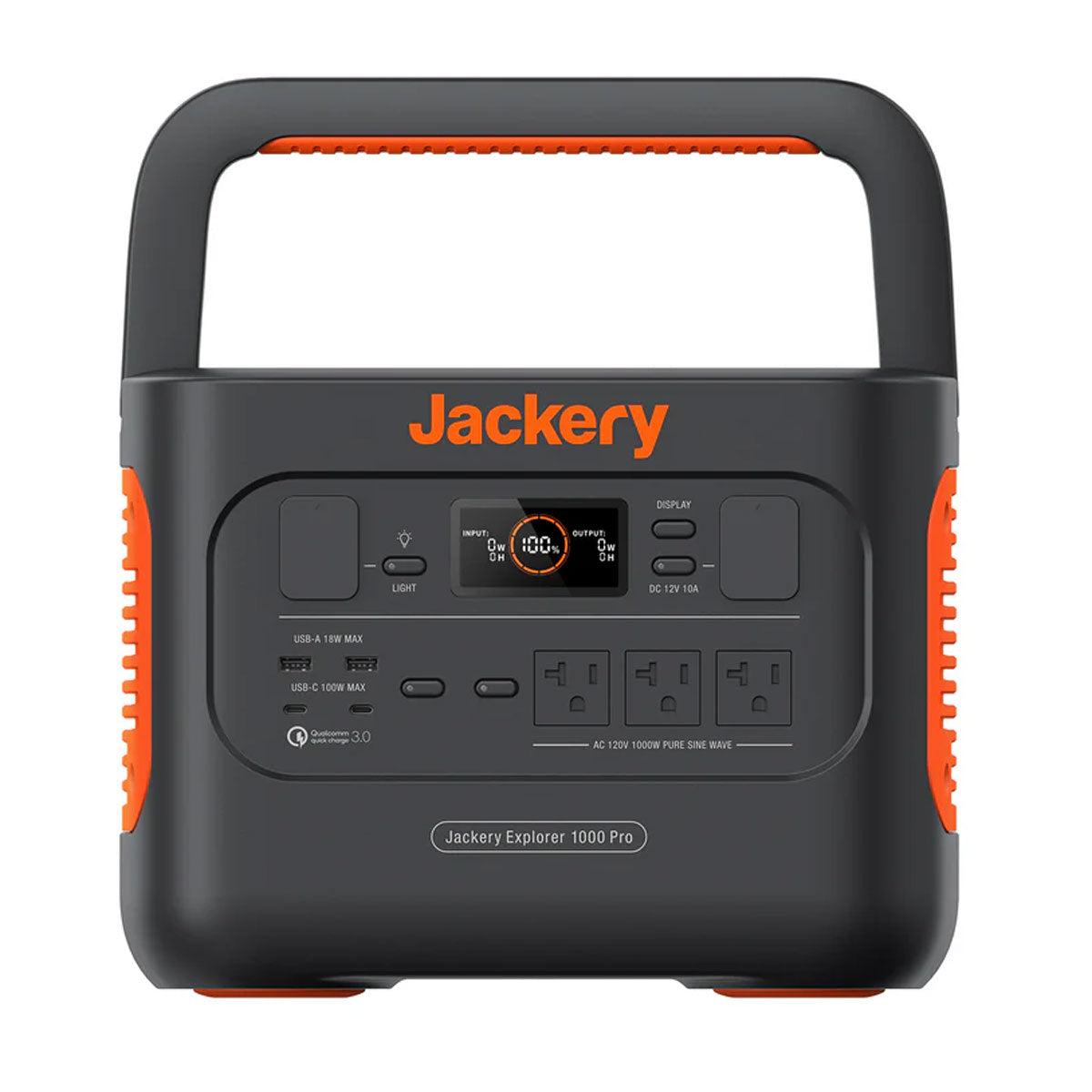
Next up, the Explorer 3000 Pro-R—a 70-pound block of lithium-iron-phosphate wrapped in magnesium alloy that survived a 12-foot drop onto concrete during the media stress test. Its 3 032 Wh capacity can run a full-size fridge for two days or fast-charge an electric motorcycle in 90 minutes. Dual 2 300-watt AC ports and a 100-amp Anderson port make it a silent welder’s dream.
But the headline is the IP67 rating. Drop it in a river, Jackery says, and it floats long enough for you to fish it out. Early Indiegogo backers locked theirs in at $1 799; retail will hit $2 499 when shipments start in August.
The Robot That Never Forgets the Sun
The showstopper arrived last: a knee-high autonomous rover dubbed SunSeeker X. Four Mecanum wheels let it crab-walk across sand or gravel while a 360-degree optical tracker keeps its 800-watt folding array pointed within 0.5 degrees of optimal azimuth. Obstacle-avoidance lidar—borrowed from warehouse robots—means it’ll skirt camp chairs, dogs, or sleeping toddlers.
Jackery envisions campers deploying the robot at basecamp; by nightfall it returns, tailgate up, to deliver 1.8 kWh of quiet, fume-free energy. Pre-orders open at $3 299, but the company is quietly pitching disaster-relief agencies on leasing fleets after hurricanes or wildfires.
Market Shockwaves
Energy-analyst firm Wood Mackenzie calls the trifecta “the first credible threat to small gasoline generators since Honda’s EU220i.” With U.S. generator sales topping 1.8 million units annually, even a 5 % substitution rate would shift $450 million toward solar storage. Jackery’s parent company, China’s Hello Tech, saw its Shenzhen-traded stock jump 8 % on the news.
Bottom Line
Jackery isn’t just selling gadgets; it’s selling the psychological luxury of knowing you can walk off the grid and still run a blender. If the products survive real-world abuse—and early YouTube drop-tests suggest they might—the biggest winner won’t be Jackery. It’ll be every homeowner who finally flips the utility main breaker with confidence.