After Assad: Syrians in Turkey Face the Long Road Home
With Assad gone, Syrians in Turkey weigh the pull of home against the harsh realities of return.
The Crossing Point
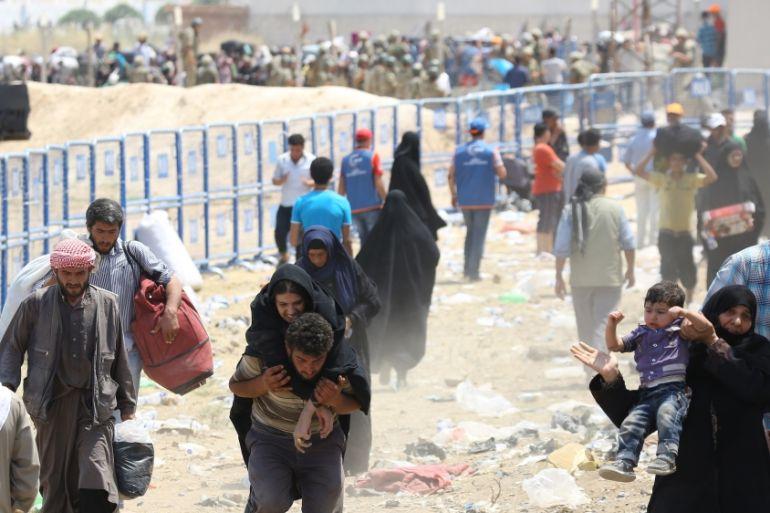
It is just after dawn on the banks of the Orontes River when Ahmed al-Hassan snaps shut his third and final suitcase. Inside: two children’s report cards, his mother’s coffee cup, and a folded Turkish residence permit that expired three weeks ago. Around him, 300 Syrians wait for the minibuses that will carry them toward the Bab al-Hawa border gate—back to a homeland most have not seen since 2013.
“I never thought the day would come when going home felt scarier than leaving,” Ahmed says, bouncing his toddler on his hip. “But here we are, trading one uncertainty for another.”
The Numbers Behind the Exodus
Since the collapse of the Assad regime in December, Turkish Interior Ministry data show a 42 % rise in voluntary repatriation applications from Syrians. In February alone, 11,847 people crossed into northwestern Syria—triple the figure from the same month last year. Yet the United Nations estimates 2.7 million registered Syrians remain on Turkish soil, many caught between Ankara’s tightening policies and a homeland still grappling with militia rule, crumbling infrastructure, and no clear national budget for 2025.
Human-rights lawyers warn the uptick is less a vote of confidence in Syria’s future than a response to Turkey’s new biometric-deadline regime. Starting April 1, Syrians who fail to re-register with updated iris scans risk losing access to state health insurance and their children’s places in public schools.
What Awaits on the Other Side?
At the border, Return Assistance Centers run by the Syrian interim government hand out leaflets headlined “Your Rights, Your Duties.” The bullet points are optimistic: free plots of land for farmers, a $400 micro-grant for small businesses, exemption from military service for men over 30. But the fine print tells a different story. Electricity in Idlib averages six hours a day; the World Food Programme rations have been halved since January; and the Syrian pound, printed in Russia, is trading at 18,000 to the dollar on the black market.
- Housing: 70 % of residential buildings in Aleppo’s eastern districts are marked “structurally unsound” by local engineers.
- Jobs: Average daily wage for construction laborers is 7 Turkish lira—about 20 U.S. cents—one-tenth of what the same worker earns in Gaziantep.
- Schools: UNICEF reports 2,400 new classrooms need to be built before September to absorb returning pupils.
The Emotional Ledger
For 17-year-old Rasha Khaled, the dilemma is mathematical. Stay in Istanbul, finish the International Baccalaureate, maybe win a European scholarship. Or join her uncle in rural Hama, help reopen the family olive press, and marry—an arrangement her parents consider “security.” She keeps two envelopes under her mattress: one holds a conditional acceptance from Boğaziçi University; the other, a notarized marriage consent form.
“Every Syrian I know keeps two envelopes,” Rasha shrugs. “We’ve learned to live in plural.”
Ankara’s Calculus
Turkish officials insist repatriation is voluntary, but the architecture of policy suggests otherwise. New regulations bar Syrians from working in 37 professions, including dentistry, interior design, and maritime engineering. Provincial governors have imposed geographic caps: no more than 25 % of any neighborhood’s population can be Syrian. Meanwhile, state broadcaster TRT Arabic airs nightly segments titled “Safe Zones Ready for Return,” complete with drone shots of renovated schools and hospitals.
President Recep Tayyip Erdoğan, facing municipal elections this month, told a rally in Hatay, “We will send one million Syrians back.” The line drew five full seconds of applause—an eternity in televised politics.
The Smugglers’ New Pitch
Where policy stalls, the black market adapts. Former people-smugglers, once paid to sneak Syrians into Turkey, now advertise “reverse journeys” on Telegram channels. Rates vary: $250 per adult, $100 per child, family packages negotiable. The price includes a seat in a rusted coach, a boxed meal of chicken and rice, and—most importantly—a Turkish police “exit” stamp that won’t trigger a five-year re-entry ban.
Yet perils persist. Last week, a minivan overturned near Reyhanlı, killing four passengers who had hoped to re-enter Syria under the radar. Their bodies were held in a Hatay morgue for 48 hours while families argued over who would pay the $1,100 repatriation fee for the corpses.
A Glimpse of Reconstruction
Not every story ends in despair. In the northern town of al-Bab, 28-year-old Rami Turkmani has reopened his father’s electronics shop. With Turkish lira still circulating along the border, he prices televisions in both currencies and offers 12-month installment plans. Sales are up 60 % since January, he says, fueled by returnees who spent a decade dreaming of flat-screen comforts.
Still, the electricity problem undercuts optimism. Rami powers his showroom with a second-hand diesel generator that drinks 40 liters a day—costly, noisy, and illegal under local environmental bylaws. “We rebuild with one hand and hold our breath with the other,” he jokes, but the laugh does not reach his eyes.
The Quiet Majority
Back in Istanbul’s Bağcılar district, Um Mohammed stirs lentil soup for 40 neighbors breaking Ramadan fast. She has no intention of leaving. Her husband drives a city bus; her eldest son, born in Syria, now speaks Turkish better than Arabic. On her living-room wall hangs a framed map of pre-war Syria, edges yellowed by time and cigarette smoke.
“They tell us to go home,” she says, ladling soup into chipped bowls. “But home is where your children don’t flinch at the sound of fireworks.”
As the evening call to prayer echoes, WhatsApp groups light up with rumors—new amnesties, promised EU funds, a surprise Erdogan visit to Idlib. None are confirmed; all are believed. In the storytelling tradition of displaced people, every whisper is a breadcrumb leading either back or forward, and no one yet knows which path ends in safety.
Next Chapter
The buses will keep rolling at dawn, loaded with suitcases and contradictions. Whether the passengers are pioneers of reconstruction or footnotes in a larger geopolitical shuffle remains an open question—one whose answer will be written not in Ankara or Damascus, but in the quiet choices of millions carrying two envelopes and a single, fragile hope.