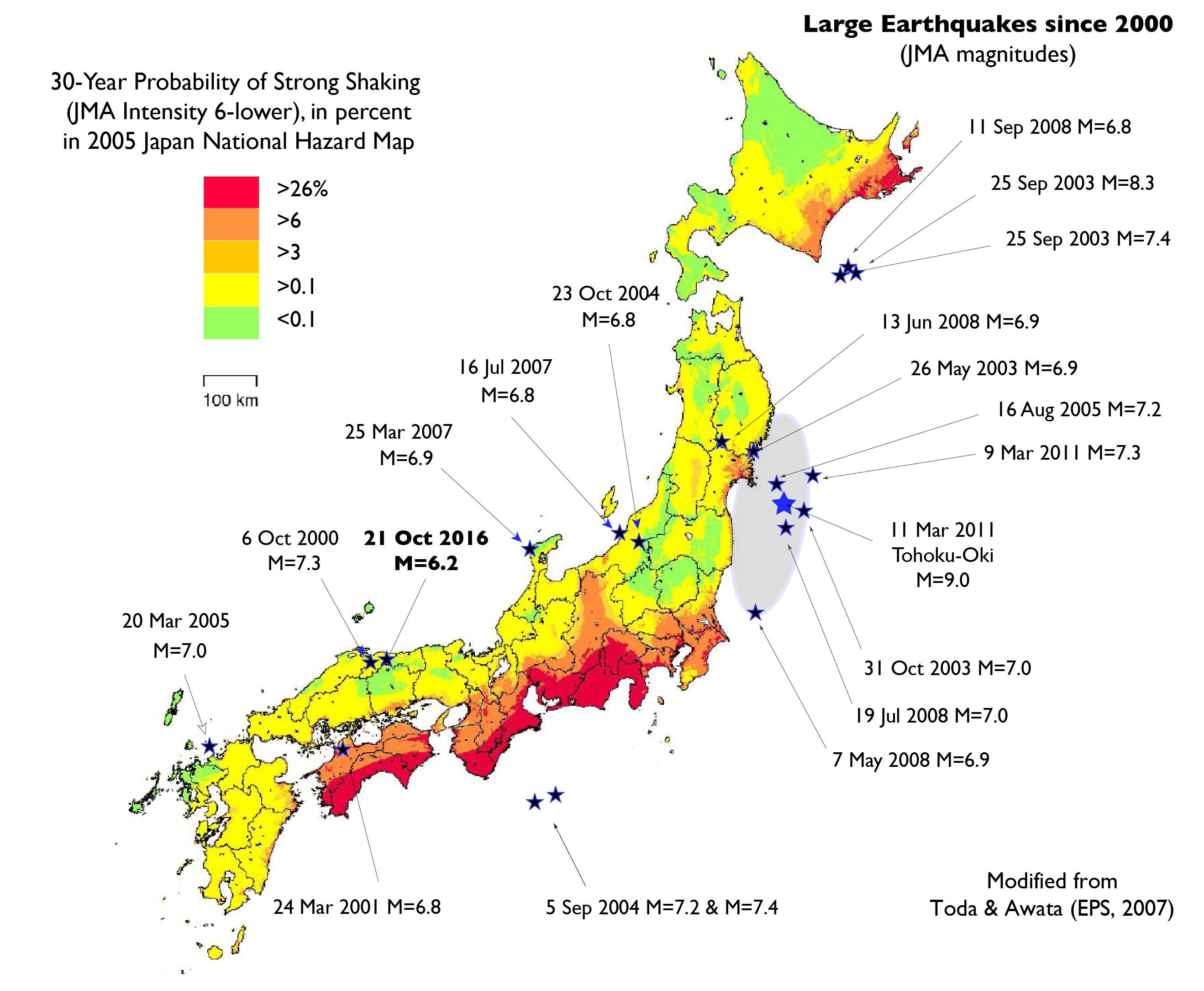
6.2 Earthquake Jolts Shimane Prefecture; No Tsunami Threat
A 6.2-magnitude earthquake struck Shimane Prefecture early Monday, shaking western Japan but triggering no tsunami alert.
Strong Quake Rattles Western Japan
MATSUE, Japan—Residents of Shimane Prefecture were jolted awake at 2:17 a.m. local time Monday when a magnitude-6.2 earthquake ripped through the region, shaking homes and sending books crashing from shelves.
Quick Response, No Casualties Reported
Japan’s Meteorological Agency confirmed the epicenter lay 10 kilometers beneath the mountainous interior of the prefecture, roughly 30 kilometers northeast of the capital city of Matsue. Within minutes, seismologists ruled out the risk of a tsunami, calming fears along the Sea of Japan coastline.
“The tremor lasted about 20 seconds,” said Yui Nakamura, a 43-year-old innkeeper in the hot-spring town of Tamatsukuri. “Our sliding doors rattled like drums, but so far everyone in our neighborhood appears safe.”
Transport and Power Unaffected
Local utilities reported no immediate outages, and bullet-train services on the San’in Line resumed inspections before restarting on schedule. By dawn, Shimane’s airports were operating normally, sparing travelers the chaos that followed last month’s stronger quake off the Noto Peninsula.
Geology of the Region
Western Honshu lies near the intersection of three tectonic plates, making Shimane no stranger to seismic activity. Monday’s event registered a lower-5 on Japan’s 7-point shindo intensity scale in parts of the prefecture—strong enough to wake most residents but below the threshold that typically triggers widespread structural damage.
Preparedness Remains Key
Officials urged households to check emergency kits, warning that aftershocks could continue for several days. Schools across the region opened as planned, with principals using morning assemblies to review evacuation routes.
- Keep a flashlight and shoes beside beds
- Secure tall furniture to wall studs
- Know the nearest hillside or reinforced shelter
Japan’s rigorous building codes, tightened after the 1995 Kobe disaster, again appeared to pay dividends: early surveys found only minor cracks in older wooden structures and no reports of serious injuries.