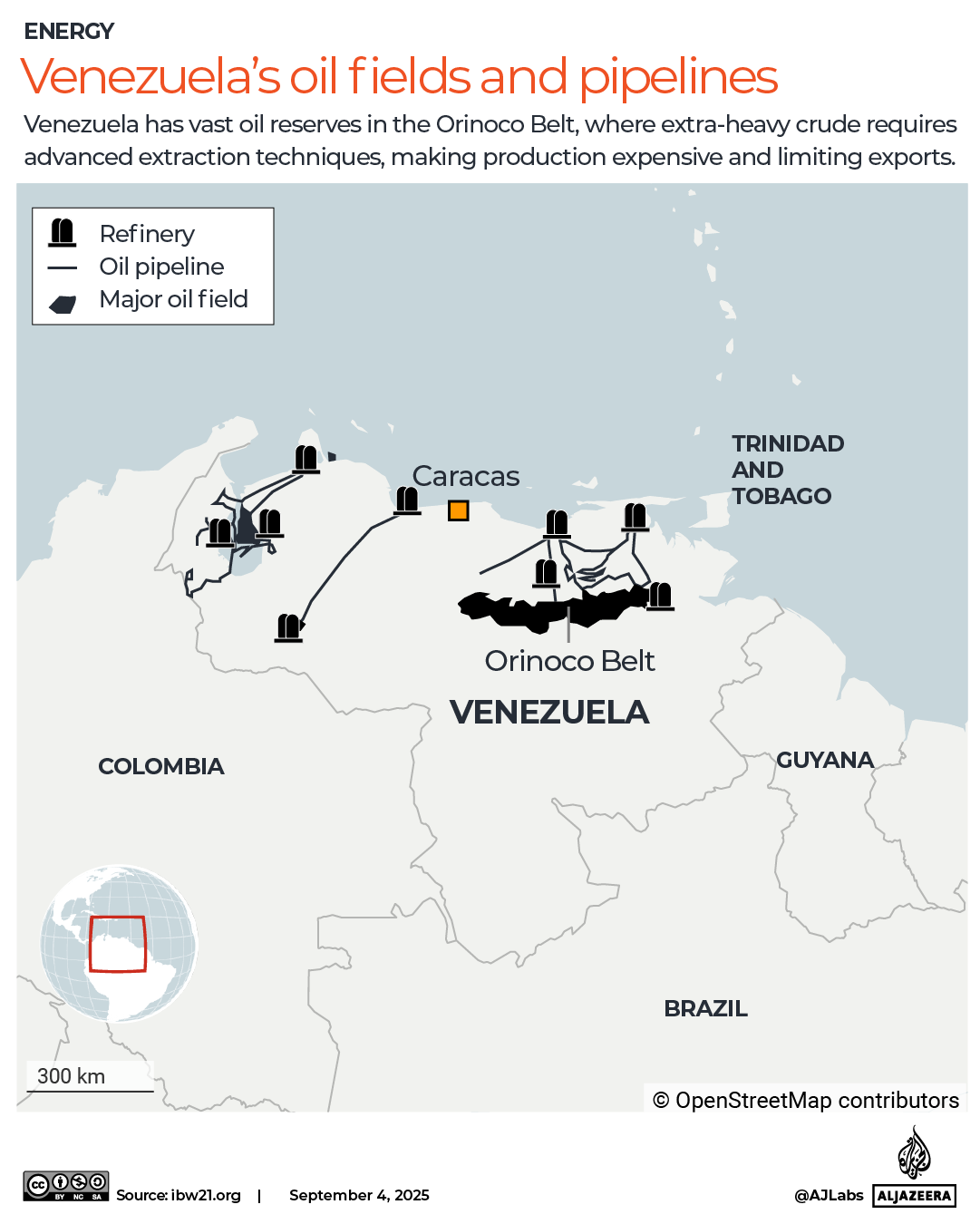
Venezuela’s Oil Crown at Risk: Inside the World’s Largest Proven Reserve
Once the engine of Latin America, Venezuela’s 303-billion-barrel reserve is now a rusting monument to squandered potential—and the world may soon pay the price.
Black Gold on the Brink
Maracaibo, Venezuela—At dawn, the lake that once powered the planet shimmers like a sheet of polished obsidian. Fishermen cast nets from wooden skiffs, but the real treasure lies 3 km beneath their hulls: the world’s largest proven oil reserve, estimated at 303 billion barrels. Today, that treasure is slipping through Venezuela’s fingers.
From Boom to Bust
In the mid-2000s, Petróleos de Venezuela (PDVSA) churned out 3.2 million barrels per day, bankrolling hospitals, highways, and Hugo Chávez’s social programs. By February 2024, output had collapsed to 750,000 bpd—less than a quarter of its peak—according to OPEC secondary sources. Corruption, U.S. sanctions, and chronic under-investment have turned the Orinoco Belt’s heavy crude into a stranded asset.
The Sanctions Squeeze
Washington’s April 2024 decision to re-impose snap sanctions erased the modest rebound that followed last year’s partial relief. Tankers that once queued off José Terminal now drift half-empty; ship-to-ship transfers have plunged 38 %, data from TankerTrackers.com shows. “We’re back to bartering cargoes for diluents and food,” a veteran oil trader told Reuters on condition of anonymity.
“If Caracas can’t stabilize output, global spare capacity drops to a 15-year low,” said Claudio Galimberti, head of Americas research at Rystad Energy. “Brent could spike above $100 by winter.”
Inside the Orinoco Belt
Drive south from Puerto Ordaz and the savanna gives way to a lunar landscape of coke piles and flaring towers. At PetroJunín, joint venture crews work 12-hour shifts in 40 °C heat. Yet only 60 of 200 drilling rigs are active; the rest stand idle, their paint peeling under the tropical sun. PDVSA’s own audits admit water injection is 30 % below target, accelerating decline rates in fields that already yield some of the world’s thickest crude.
The Migration Drain
Since 2015, more than 7.7 million Venezuelans have fled, including an estimated 40 % of PDVSA’s skilled workforce. “We lost our geologists, our corrosion engineers,” said Luis, a former refinery manager now driving a taxi in Bogotá. “You can’t run a complex with YouTube tutorials.”
Geopolitical Dominoes
While Venezuela flounders, global appetite grows. China’s teapot refiners crave the discounted heavy barrels; India’s Reliance has quietly resumed test cargoes. Yet any significant ramp-up requires billions in foreign capital—cash that will stay on the sidelines until Washington signals sanctions stability. In the meantime, traders are already pricing in a 5 % risk premium on winter Brent futures.
Environmental Time Bomb
Flaring in the Orinoco emits an estimated 5 Mt of CO₂ annually—equal to the entire carbon footprint of Uruguay. PDVSA lacks funds to re-inject associated gas; pipelines leak so regularly that locals call the night sky “the eternal sunset.” Without remediation, the region faces a toxic legacy that could outlast any political transition.
What Happens Next?
- Political Deal: A credible election and sanctions relief could unlock $20 bn in upstream investment, lifting output to 1.5 m bpd within five years, analysts at Wood Mackenzie project.
- Status Quo: Continued mismanagement accelerates decline to 500 k bpd, tightening global markets and adding $15–20 to Brent by Q1 2025.
- Asset Fire Sale: Caracas could cede majority stakes to Russian or Iranian firms, reshaping Western Hemisphere energy security and provoking fresh U.S. retaliation.
The Human Cost
Back on Lake Maracaibo, fisherman José Ramírez pulls a tar-stained net aboard. “The fish are gone,” he shrugs, pointing to rainbow slicks that shimmer across the water. “We were promised oil wealth; we got an oil stain.” Whether Venezuela’s black gold can rebound—or simply sinks deeper into the mud—will shape not only the nation’s fate, but the price every driver pays at the pump.