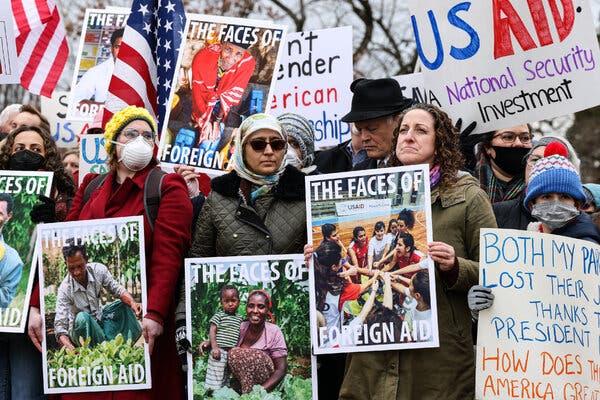
US Slashes UN Humanitarian Aid to $2 Billion, Tells Agencies to ‘Adapt, Shrink or Die’
The US has halved its UN humanitarian pledge to $2 billion, ordering agencies to ‘adapt, shrink or die’ as food, shelter and vaccine programs face deep cuts.
Washington Drops the Axe
Geneva—The United States has quietly cut its annual pledge to the UN’s humanitarian purse by nearly half, capping future support at $2 billion and sending shock waves through aid corridors from Amman to Addis Ababa.
“We expect agencies to adapt, shrink or die,” a senior State Department official told counterparts in a closed-door briefing last week. “The era of blank checks is over.”
What Got Chopped
- World Food Programme: Down 42%, imperilling school meals for 3.2 million children.
- UNHCR: Slashed by 38%, forcing the refugee agency to shelve winterization plans across the Middle East.
- UNICEF: Vaccine cold-chain funds frozen in 11 fragile states.
Why Now?
Capitol Hill conservatives have long argued that America’s $4.3 billion contribution last year—its largest ever—subsidized bloated bureaucracy. With a new appropriations cycle looming, the administration is betting that humanitarian emergencies can be solved cheaper, faster, and closer to home.
Human Cost, Real Numbers
In Jordan’s Zaatari camp, Syrian teacher Reem al-Khalaf learned on WhatsApp that her monthly cash-for-work stipend will vanish in 60 days. “They say ‘adapt,’ but how do I adapt my children’s empty plates?” she asked.
Global Ripple
European donors hinted at partial back-filling, yet UN officials warn a $2.7 billion shortfall remains. “We’re looking at ration cuts in April, not August,” one emergency coordinator said. “That’s famine territory.”
What Happens Next
The UN Secretary-General will convene an emergency pledging conference in Geneva on 17 March. Meanwhile, USAID is drafting a new “cost-share” model requiring agencies to raise 30% of project funds from private donors before unlocking US dollars.
Whether that formula can stave off catastrophe—or merely delay it—will dominate headlines long after the snow melts in Zaatari.