Trump’s Venezuela Gambit: Bold Rescue or Putin-Style Power Play?
Trump bypasses Congress to freeze Venezuelan oil cash and recognize opposition leader Machado, igniting claims he’s importing Putin’s strongman tactics.
A Midnight Call That Shook Caracas
The WhatsApp voice note arrived at 01:14 a.m. local time. A senior Venezuelan opposition aide pressed play and heard the gravelly baritone of a U.S. intermediary: “The White House is ready to move—no more press releases, only action.” Within 48 hours, President Donald Trump signed an executive order freezing all Venezuelan oil revenue routed through U.S. banks and recognized opposition envoy María Corina Machado as “interim coordinator for reconstruction.” The move, unveiled without congressional buy-in, ignited charges at home that Trump is importing Vladimir Putin’s playbook of unilateral foreign intervention.
Inside the Situation Room: “We’re Done With Waiting”
Three officials who sat in the Oval Office that afternoon tell a different story. They describe a president flipping through satellite images of the collapsed Cardón refinery and slamming his hand on the Resolute desk: “Ten million percent inflation—how is that not a national-security threat?” The order drafted by trade adviser Peter Navarro bypassed the traditional inter-agency review, prompting one State Department lawyer to draft a resignation letter that still sits unsent in his desk drawer.
“We were told the Constitution is not a suicide pact,” the lawyer confided, asking for anonymity to avoid retaliation. “But this feels like a sequel to 2017—except now the target is Caracas, not Tehran.”
Putinization? Or Reagan-Style Rollback?
Senate Foreign Relations Democrats quickly labeled the policy “Putinization,” arguing that unilateral sanctions and recognition of parallel governments echo the Kremlin’s 2014 Ukraine doctrine. Yet Latin-America hawks counter that Trump is channeling Reagan’s 1981 stand against the Sandinistas, when financial strangulation ultimately forced elections. The numbers fuel both narratives:
- Venezuelan crude exports to the U.S. have already fallen 36 % since 2023, according to tanker-tracking firm Vortexa.
- But Russia’s Rosneft has increased shipments to India, replacing U.S. refiners and softening the blow.
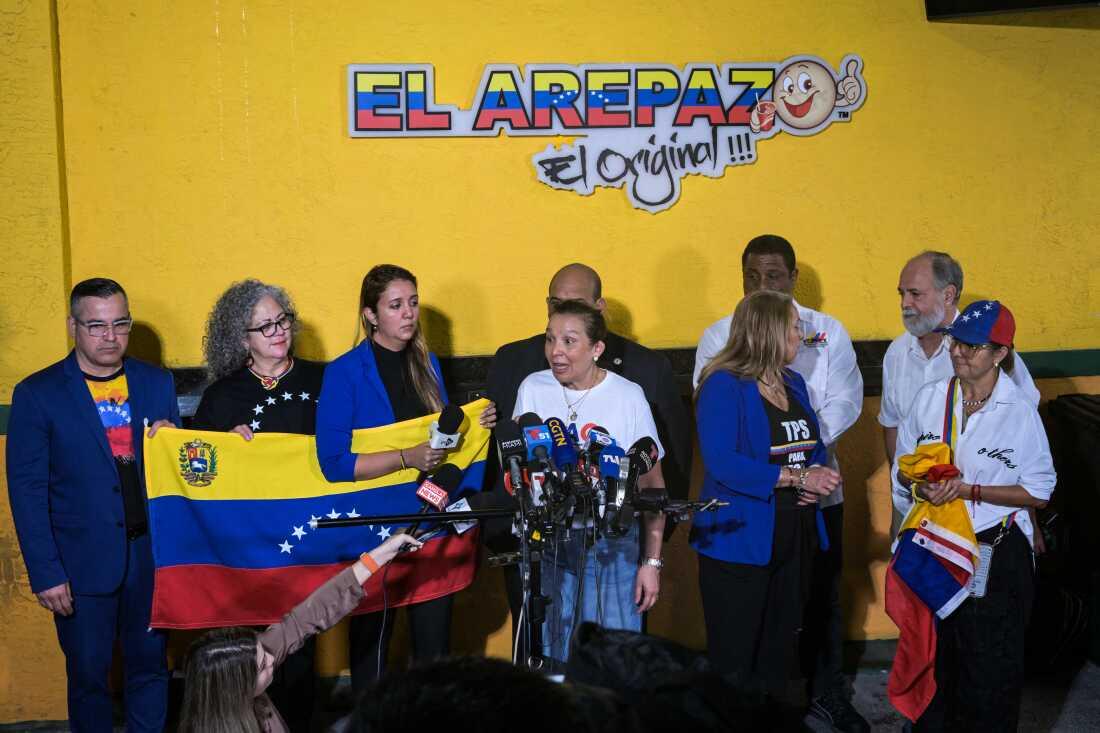
Meanwhile, Florida’s Venezuelan-American community—crucial to Trump’s 2024 map—erupted in cheers at the Versailles restaurant in Miami, banging pots and waving the old tri-color flag. “This is the first time since 1999 we feel the White House has our back,” said Andres Páez, a former PDVSA engineer turned Uber driver who still wears his company badge for luck.
What Happens to the $7 Billion Frozen in New York?
The Federal Reserve now holds roughly $7 billion in Venezuelan Central Bank assets, frozen since 2019. Under the new directive, Treasury Secretary Scott Bessent can channel those funds into a trust controlled by Machado’s team—provided they present a transition plan within 120 days. Skeptics warn of legal chaos: U.S. courts have already awarded slices of that pie to Crystallex, ConocoPhillips, and other creditors holding judgments against the Maduro regime.
“Imagine telling a bankruptcy judge that the collateral just walked out the door,” said a senior New York attorney representing bondholders. The litigation could drag past the 2026 mid-terms, turning a geopolitical gamble into a courtroom quagmire.
Next Flashpoints
- Colombian Border: U.S. Special Envoy Richard Grenell is pressing Bogotá to allow American military engineers to refurbish the Cúcuta bridge for humanitarian convoys—an idea Colombia’s leftist president Gustavo Petro has so far rejected.
- Chinese Debt: Beijing holds $19 billion in Venezuelan liabilities backed by oil. Analysts fear Beijing could accelerate its yuan-denominated swap lines, undercutting dollar leverage.
- 2024 Map: Pollster Fernand Amandi’s latest survey of 800 Venezuelan-American voters in Miami-Dade shows Trump’s support jumping from 42 % to 67 % after the order—enough to flip Florida in a tight race.
Back in Caracas, Nicolás Maduro responded by promoting loyalist general Vladimir Padrino to oversee a new “Anti-Blockade Command.” State TV aired clips of soldiers painting “Yankee Go Home” on armored vehicles—an echo of 2004, but with fewer viewers; most citizens were standing in line for cooking gas.
Whether history records this week as the moment Venezuela’s dictatorship cracked—or as another foreign-policy overreach that galvanized adversaries—could hinge less on ideology than on the price of crude when Americans head to the polls next November.