Trump’s Greenland Gambit: Inside the U.S. Move That Has NATO on Edge
The U.S. revives talk of annexing Greenland, sparking a standoff with Denmark and rattling NATO allies as Washington eyes Arctic supremacy.
The Ice-Cold Offer That’s Heating Up NATO
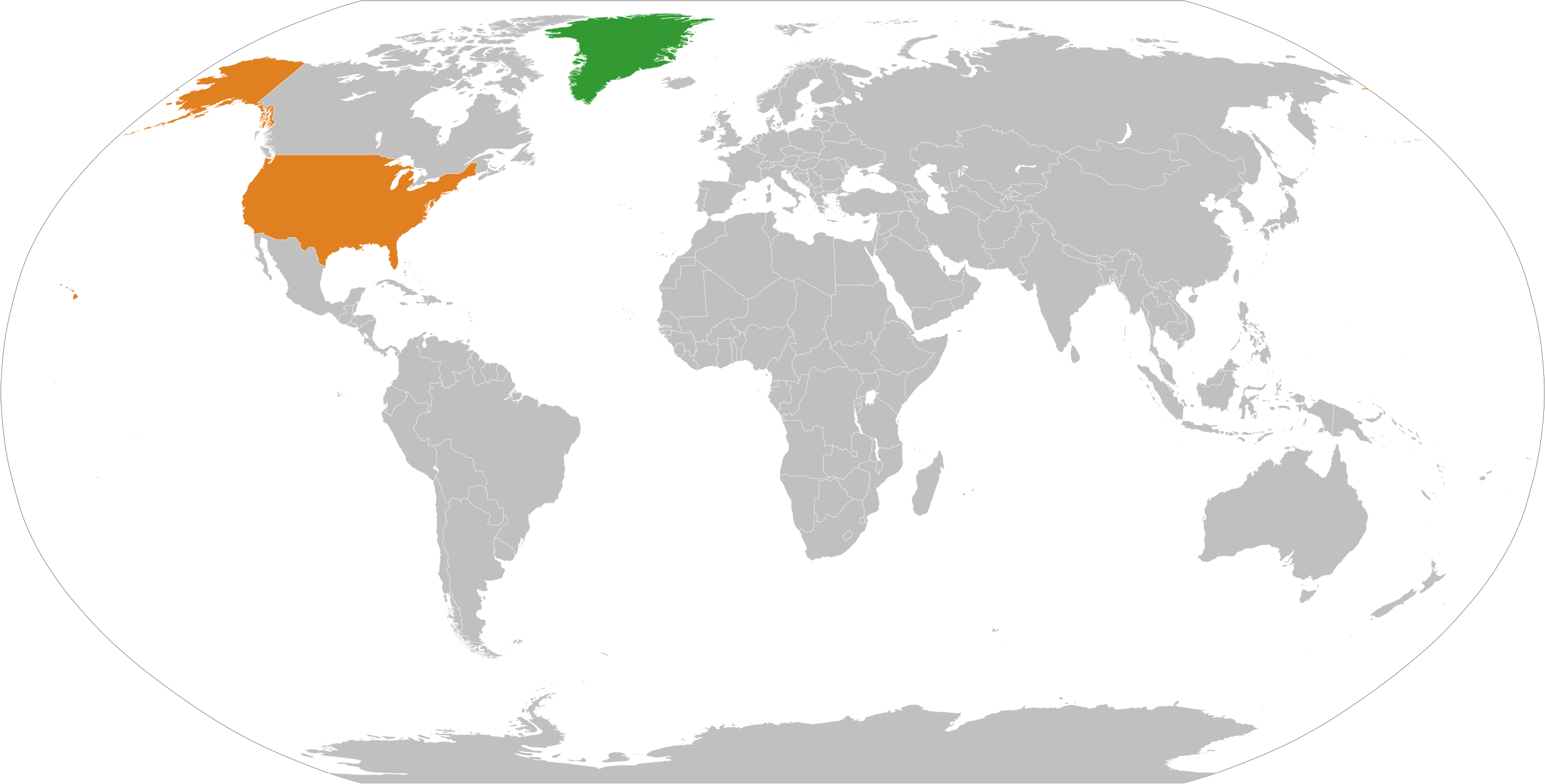
Greenland—population 56,000 and a landmass three times the size of Texas—was quietly minding its business when Washington reminded the world it wants the island anyway. The message, delivered in a closed-door briefing on Capitol Hill last week, was as blunt as an Arctic winter: the United States is still open to "purchasing or otherwise acquiring" the autonomous Danish territory, sources present told The Ledger. Danish officials in the room called the suggestion "non-negotiable." NATO diplomats left it at "alarming."
A Deal That Refuses to Die
President Donald Trump first floated the idea in 2019, calling it "a large real-estate deal." The proposal was laughed off in Copenhagen and shelved in Brussels. But the memo never disappeared; it simply moved into darker briefing folders. On Tuesday, Secretary of State Marco Rubio resurrected the specter, telling the Senate Foreign Relations Committee that Greenland’s "strategic location and untapped resources" make it vital to U.S. security in an era of great-power competition.
"Greenland isn’t just ice and snow; it’s the padlock on the Arctic gate," Rubio said. "If we don’t hold the key, Beijing and Moscow will."
Danish prime minister Mette Frederiksen fired back within hours: "Greenland is not for sale—today, tomorrow, or ever."
Why the U.S. Keeps Knocking
- Missile-warning radar: Thule Air Base already tracks polar-launched threats for NORAD. Washington wants expanded runways and deeper ports.
- Rare-earth metals: Greenland holds an estimated 25% of the world’s unmined REEs—critical for F-35 jets and iPhones.
- Sea-lane control: Melting ice is opening a new Atlantic-Pacific shipping artery the Pentagon calls the "Arctic Beltway."
Greenland’s Own Divided Heart
Walking the streets of Nuuk, you hear two conversations. In the cafés, students dream of full independence from Denmark by 2030; in the harbor, fishermen worry that American cash could drown Inuit culture overnight. Greenland’s premier, Múte Egede, has played both sides, courting U.S. investors while reassuring Copenhagen that "our flag will stay the same color."
Privately, aides say Egede is exploring a third path: leveraging U.S. interest for a bigger Danish subsidy and faster road to sovereignty—without ever lowering the Stars and Stripes.
Allies Brace for a NATO Rift
Annexation talk is already straining Article 5 cohesion. Norway has quietly moved additional F-35s to Evenes air station; France dispatched the frigate Alsace to patrol the Denmark Strait. One NATO diplomat, requesting anonymity, warned: "If Washington strong-arms a fellow ally, the alliance becomes a garage sale—every piece has a price tag."
What Happens Next?
Congressional sources expect a formal Arctic strategy paper within 60 days that will stop just short of endorsing annexation but will recommend "enhanced sovereign partnerships"—a phrase Greenlandic officials interpret as code for 99-year leases and infrastructure spending. Denmark, for its part, is rushing through its own package: a $1.3 billion investment plan for airports, clean-energy projects, and university expansion designed to prove Copenhagen can modernize the island faster than America can buy it.
As one U.S. senator conceded over coffee: "We’re not buying real estate; we’re buying time—time before China locks in mineral contracts and Russia militarizes every fjord." Whether that argument melts Greenlandic resistance faster than the ice sheet itself remains the Arctic’s newest cliff-hanger.