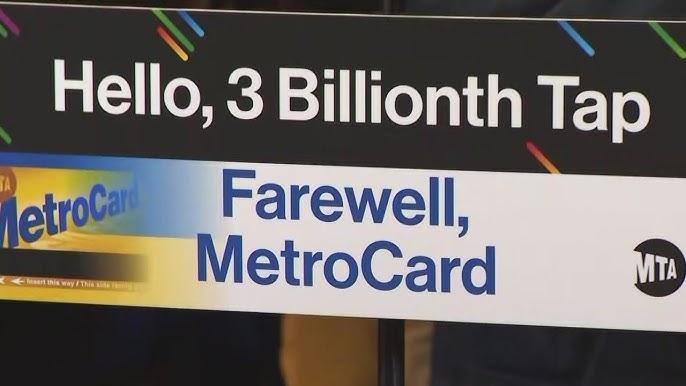
The Last Swipe: NYC Pulls the Plug on MetroCard After 30 Years
After 30 years and 50 billion swipes, New York City officially retires the MetroCard, replacing it with OMNY contactless payments overnight.
The Final Farewell
At 11:59 p.m. on a rain-slicked Friday, the turnstiles at Times Square–42nd Street clicked one last time for the thin piece of cobalt plastic that has defined New York commutes since 1993. The MetroCard—creased, cracked, and occasionally demagnetized by a cell phone—quietly ended its 30-year run.
From Token to Tap
"I still remember the first time I held one," says conductor Dolores Reyes, 58, tapping her own retirement badge. "Tokens felt like pirate coins; this felt like the future." That future is now the past. By Saturday sunrise, every subway gate and city bus reader had switched to OMNY, the contactless system that lets riders tap a phone, bank card, or MTA-issued smartcard.
The MetroCard was the last place in New York where you could still lose your train of thought—and your ride—because you bent the card. —Comedian John Mulaney, 2019
Why the Rush?
Transit officials cite speed and savings: OMNY reduces boarding time by 18%, cuts fare-evasion losses by $40 million a year, and ends the $60 million annual MetroCard replacement cycle. Environmental groups add another win: eliminating 200 million plastic mag-stripe cards annually.
What Riders Need to Know
- MetroCard vending machines will stay online until December 31 for refunds and balance transfers.
- Reduced-fare customers can request a free OMNY card by mail or pick one up at station booths beginning Monday.
- Unlimited MetroCards expire at midnight; remaining value can be transferred at omny.info or any station booth.
A City Mourns a Wallet Rectangle
On social media, New Yorkers posted funeral dirges made from the familiar yellow-and-blue swirl. One TikTok creator staged a 21-“swipe” salute. At Union Square, artist Max Colby glued expired MetroCards into a mosaic of the skyline. "It’s the cheapest material in the city," he laughs, "but it’s priceless to us."
Behind the Curtain
The MetroCard’s demise was sealed in 2016 when the MTA board approved a $573 million contract for OMNY hardware. Cubic Transportation Systems, the same contractor that installed the original MetroCard, will maintain the new network. Insiders say the switchover finished three months ahead of schedule thanks to pandemic-era ridership dips that allowed overnight testing without angry crowds.
What’s Next
By 2025, the MTA plans to integrate OMNY with regional rail, bike-share, and even yellow taxis. For now, riders can still feel the phantom swipe—muscle memory built over 50 billion trips. But the turnstile lights have turned from yellow to green, and the city’s heartbeat now pulses to a new tap.