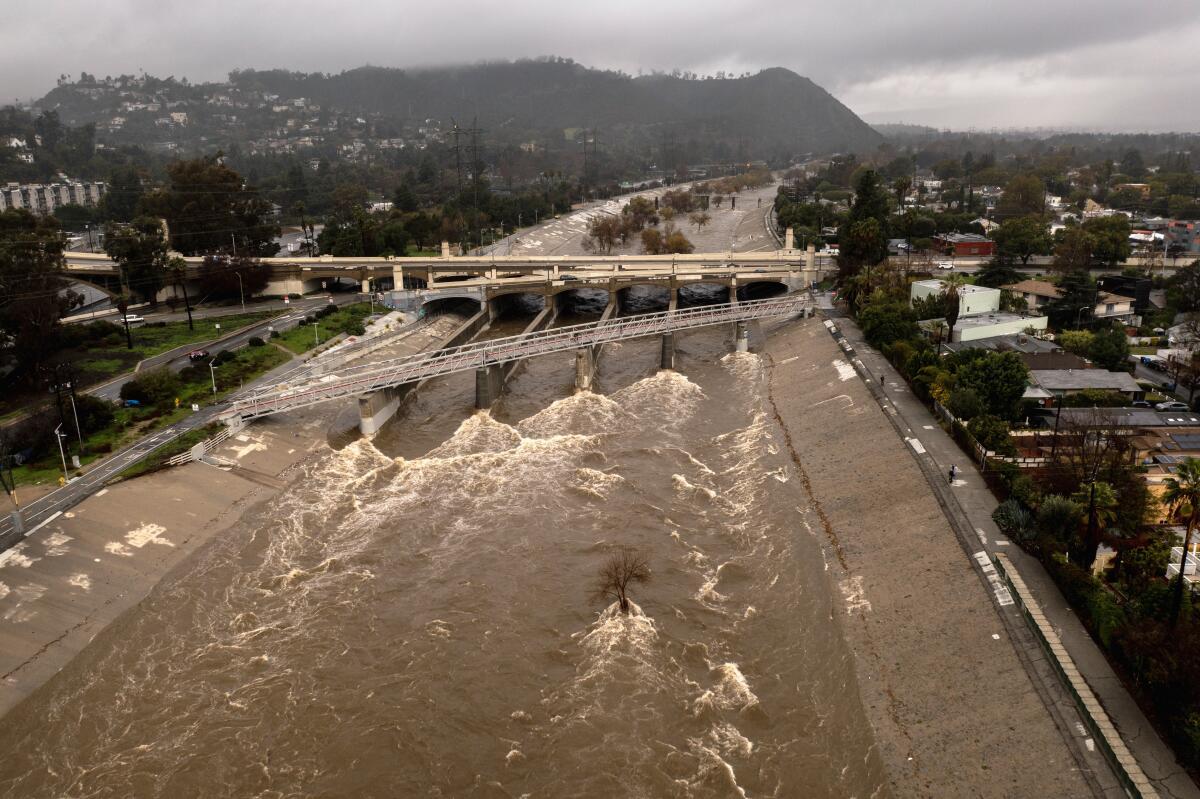
Storm to bring heavy rain to Southern California
A powerful Pacific storm is barreling toward Southern California, threatening flooding, debris flows, and widespread disruptions across a region still scarred by recent wildfires.
A Wall of Water Heads South
LOS ANGELES—The first bruised clouds appeared over Point Conception at dawn, stacking like dark dinner plates above the Pacific. By the time commuters hit the 101, the horizon had vanished behind a pewter curtain. Meteorologists at the National Weather Service say that curtain will drop tonight, dumping up to four inches of rain on a region that, only a week ago, was brushing ash from its shoulders.
"This is the kind of storm that rewrites the record books"
"We’re looking at rainfall rates of half an inch per hour for sustained periods," warned Dr. Leslie Park, a hydrologist with NOAA. "In burn-scar areas, that’s a code-red scenario."
The last time a Pacific storm of this magnitude took aim at Santa Barbara and Ventura counties, in January 2021, debris flows shut down the 101 for two weeks and sent boulders the size of SUVs into living rooms. Memory of that morning still lingers in Montecito coffee shops, where baristas keep evacuation maps taped above the espresso machine.
Timeline of Trouble
- Tonight, 8 p.m.: Rain begins across the Central Coast, intensifying as it pushes south.
- Thursday, 3 a.m.: Heaviest bands reach Los Angeles County; flash-flood watches activated.
- Thursday, noon: Storm pivots toward San Diego; mountain communities brace for snow above 6,000 feet.
- Friday dawn: Final showers taper, leaving behind slick roads and swollen rivers.
City Crews Race the Clock
At the mouth of the Los Angeles River, a backhoe clawed at a mountain of shopping carts and palm fronds Wednesday afternoon. "We clear 30 tons a day, and tomorrow it won’t matter," said Hector Saldaña, a sanitation supervisor, shouting over the clatter. "But we do it anyway, because one clogged grate can flood a neighborhood."
Across the region, 127 emergency shelters opened early, waiving COVID-era capacity caps. The Red Cross dispatched 14 mobile kitchens—each capable of serving 10,000 hot meals a day—while the city’s fleet of 200 new flood-control pumps hummed to life for the first time since their installation after the 2021 storms.
What Residents Should Do Now
- Clear gutters and storm drains of leaves.
- Pack a “go bag” with medications, documents, and three days of water.
- Sign up for emergency alerts at ReadyLACounty.com.
- Never drive through flooded intersections; 12 inches of water can float a compact car.
The Climate Context
This storm is part of a parade of atmospheric rivers that have battered California since late December, delivering 90 percent of the state’s annual rainfall in just 30 days. While the water is welcome after three years of drought, the velocity is not. Parched soil can’t absorb the deluge, turning steep canyons into sluiceways.
"We’re in a feast-or-famine cycle amplified by warming seas," explained Dr. Park. "Every degree Celsius increases the atmosphere’s water-holding capacity by 7 percent, so these storms are juiced."
A Quiet Night, Then the Roar
Back in Montecito, artist Carla Reeves rolled up a Persian rug she’s carried through three evacuations and wedged sandbags against her garage. "After the debris flow, I said I’d never rebuild," she said, eyes on the bruised sky. "But you stay for the mornings after—when the air smells like eucalyptus and the ocean is the color of melted bottle glass."
By sunset, the first fat drops splattered against her flagstone path. Somewhere upslope, a coyote howled, and the long, wet night began.