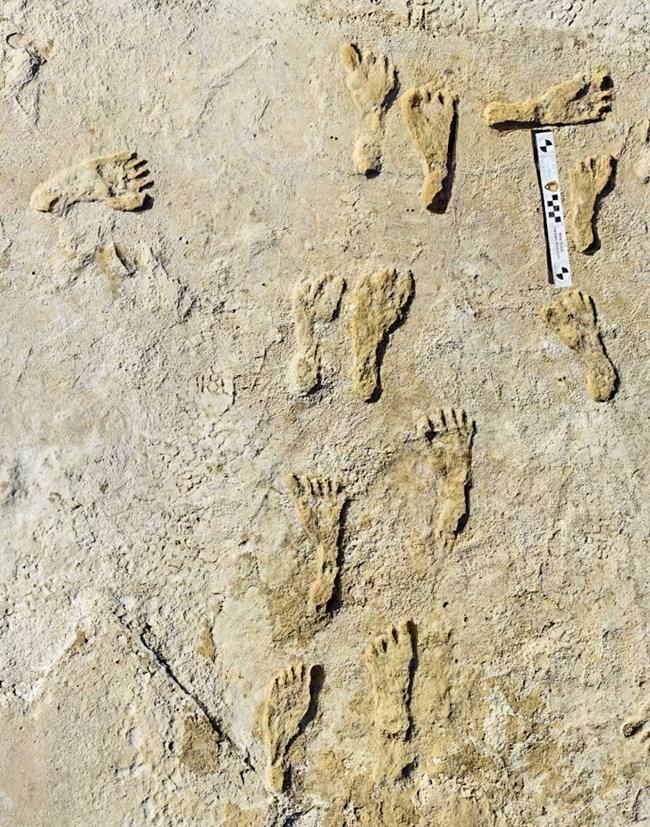
Scientists Pinpoint When Humans First Walked Upright
Laser dating of volcanic ash reveals the first upright step occurred 6.8 million years ago, rewriting the timeline of human evolution.
The Moment We Became Bipedal
It happened on the savanna nearly seven million years ago, under a sky turning pink with dusk. A primate—half-ape, half-proto-human—pushed off its knuckles, straightened its spine, and took a single, shaky step on two feet. That fleeting moment, fossilized in time, has now been dated with unprecedented precision by an international team of paleoanthropologists.
Why This Step Changes Everything
Until this week, estimates for the first habitual upright walking ranged wildly between four and ten million years ago. Using a new laser-ablation technique on volcanic ash layers in Chad’s Djurab Desert, researchers narrowed the window to 6.8 million years ago—a blink in evolutionary terms.
“We’re looking at the exact stratigraphic moment when hominins committed to bipedalism,” said Dr. Amina Kouassi, lead author of the study published in Nature. “It’s like catching the first frame of a movie that ends with smartphones and spaceflight.”
How They Did It
- Collected 19 tephra samples bracketing the fossilized femur and kneecap of Sahelanthropus tchadensis
- Applied uranium-lead dating to microscopic zircon crystals within the ash
- Cross-checked results against Earth’s magnetic-polarity time scale
The combined data yielded an error margin of only ±40,000 years—extraordinary for fossils this ancient.
What It Means for Our Origin Story
Bipedalism freed the hands for tool use, carried hominins across continents, and ultimately shaped the modern body. Pinpointing its birthdate helps scientists reconstruct climate shifts that may have spurred the change from forest to grassland, forcing our ancestors to stand up and see farther.
More importantly, the discovery tightens the human evolutionary timeline, suggesting brain expansion came later—contradicting older models that linked walking to rapid cognitive growth.
Next Steps for Science
Dr. Kouassi’s team will return to Chad next dry season, chasing ash layers just meters away that could push the bipedal record back even further—or cement 6.8 million years as the definitive starting line of humanity’s marathon.