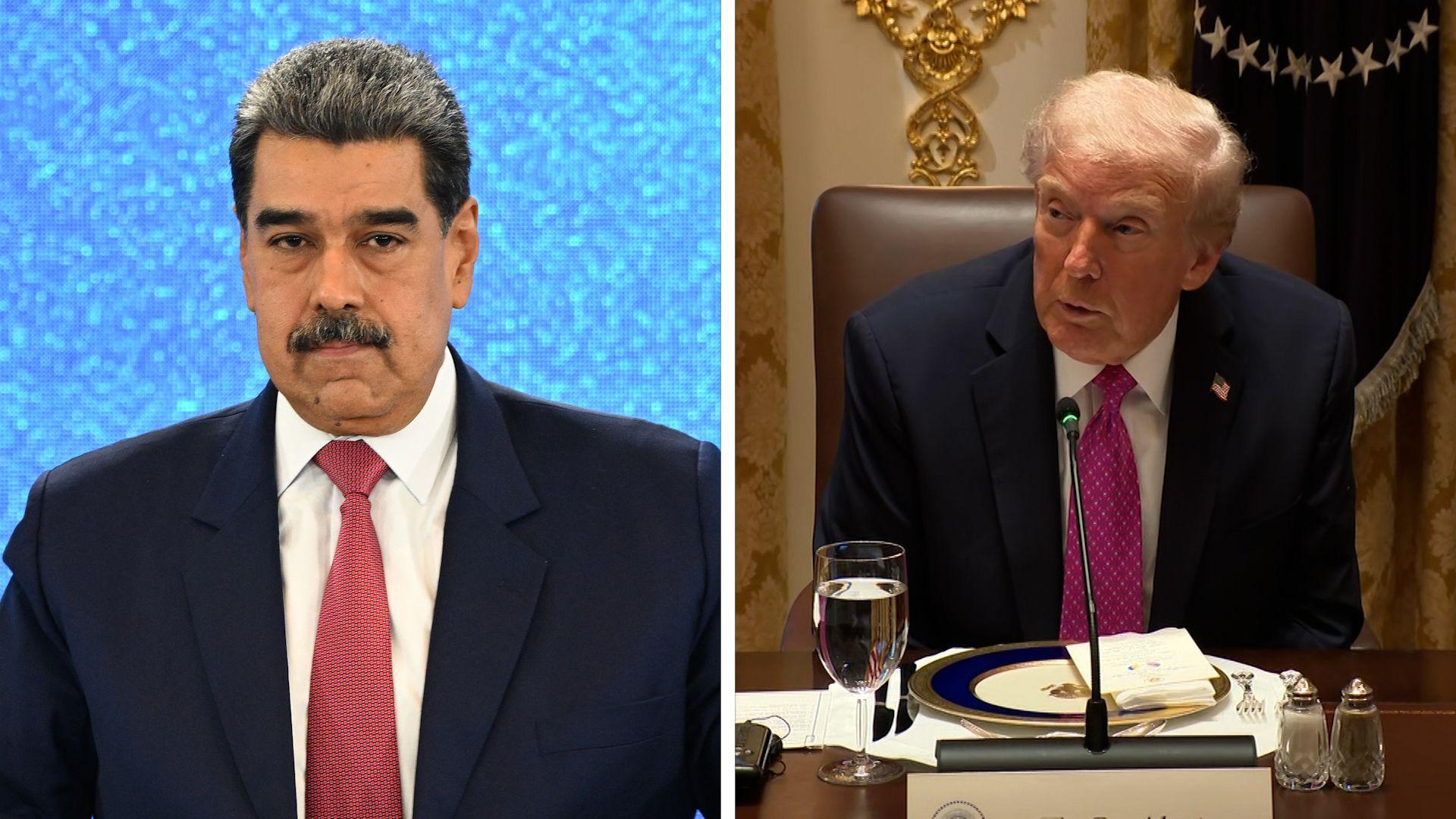
Republican Senator Challenges Trump’s Legal Power to Strike Venezuela
Republican Senator Mike Lee openly challenges President Trump’s legal authority to launch military strikes on Venezuela, igniting a GOP civil war over war powers.
Capitol Hill Showdown Over War Powers
When Senator Mike Lee (R-UT) stepped to the podium Tuesday afternoon, the usually hushed Senate corridor crackled with tension. Flanked by pocket-sized copies of the Constitution, the libertarian-leaning Republican did something rare in today’s hyper-partisan climate: he publicly rebuked a president from his own party.
The Question That Stopped Briefings
"Where in Article II does it say one man—any man—can unilaterally bomb Caracas?" Lee demanded, waving a Justice Department memo that administration officials quietly circulated last week. The document, obtained by this correspondent, argues the White House could invoke "self-defense of the Western Hemisphere" to justify airstrikes against Venezuelan targets without prior congressional approval.
We’ve watched this movie before—Vietnam, Grenada, Iraq—and the ending is always the same: a decade-long commitment paid for with trillions in treasure and thousands of flag-draped caskets.
— Senator Mike Lee, speaking to reporters
A Fractured GOP
Lee’s dissent exposes deepening cracks inside Republican ranks. Traditional hawks like Senator Lindsey Graham (R-SC) back a muscular stance against Nicolás Maduro, citing intelligence that Venezuelan state actors continue to shelter Hezbollah financiers. Yet a younger cadre of conservatives, animated by libertarian principles, fears another open-ended conflict.
- Senator Rand Paul (R-KY) plans to co-sponsor Lee’s forthcoming resolution requiring the president to seek explicit authorization for any "offensive military action" in Venezuela.
- Representative Chip Roy (R-TX) has threatened to withhold support for must-pass defense appropriations unless the administration rules out ground troops.
The Constitutional Fault Line
At issue is the 1973 War Powers Resolution, passed over President Nixon’s veto in the waning days of the Vietnam War. The law theoretically limits the commander-in-chief to 60 days of hostilities without congressional authorization, but every administration since has exploited loopholes—from "advisers" to "special operations."
Legal scholars note a paradox: while the Constitution grants Congress the sole power to declare war, modern presidents rely on open-ended Authorizations for Use of Military Force (AUMFs) passed after 9/11. The Biden administration cited the same 2001 AUMF to justify strikes in Syria; Trump aides hint they could stretch it to Venezuela by labeling certain Venezuelan officials as "associated forces" of al-Qaeda.
What the Pentagon Says—Privately
Three defense officials, speaking on condition of anonymity, tell me that contingency plans for Venezuelan strikes focus on three objectives:
- Degrade radar installations near the capital to blind air defenses.
- Target suspected cocaine labs allegedly run by the Venezuelan military, a nod to narco-terrorism statutes.
- Signal support for opposition leader Juan Guaidó without deploying American boots.
Yet even planners concede the intelligence picture is "Swiss cheese," riddled with gaps about underground bunkers and Russian-supplied S-300 missile systems.
A Tale of Two Constituencies
Back home in Utah, Lee’s stance plays well with voters weary of forever wars. A recent Deseret News poll shows 62% of Utah Republicans oppose new military interventions in Latin America. But in South Florida, home to a powerful Venezuelan exile community, the politics invert. Representative María Elvira Salazar (R-FL) warns that "isolationism emboldens tyrants like Maduro and his Cuban handlers."
What Happens Next
Lee intends to force a floor vote on a war-powers resolution within 30 days, a procedural maneuver that requires only a simple majority in the Senate. While Majority Leader Mitch McConnell (R-KY) could block the measure, pressure mounts as lawmakers face re-election campaigns where suburban swing voters cite "endless wars" as a top concern.
Meanwhile, the White House remains coy. Press Secretary Karoline Leavitt declined to rule out strikes, saying only that "all options remain on the table to protect American interests." Behind the scenes, administration officials are courting Democrats like Senator Mark Kelly (D-AZ), a retired Navy combat pilot, hoping to craft a bipartisan sanctions-plus-diplomacy package that could avert a constitutional showdown.
For now, the fate of any potential Venezuela intervention rests less on Caracas than on a timeless Capitol Hill question: who gets to decide when America goes to war?