Quadrantids Ignite 2025 Skies in a Brief, Brilliant Blast
The Quadrantid meteor shower peaks this week, offering up to 120 swift, green-tinted meteors an hour under crisp winter skies.
The Year’s First Meteors Arrive in a Hurry
Before sunrise on January 3, veteran sky-watcher Luisa Herrera zipped her parka to the chin atop California’s Mount Pinos, coffee steaming in the pre-dawn chill. Within minutes, a cobalt streak tore across Ursa Major, followed by another—then a third. "It was like someone struck a match against the sky," she laughed, voice still hoarse from the cold. "The Quadrantids don’t linger; they sprint."
Why the Quadrantids Flash and Fade Fast
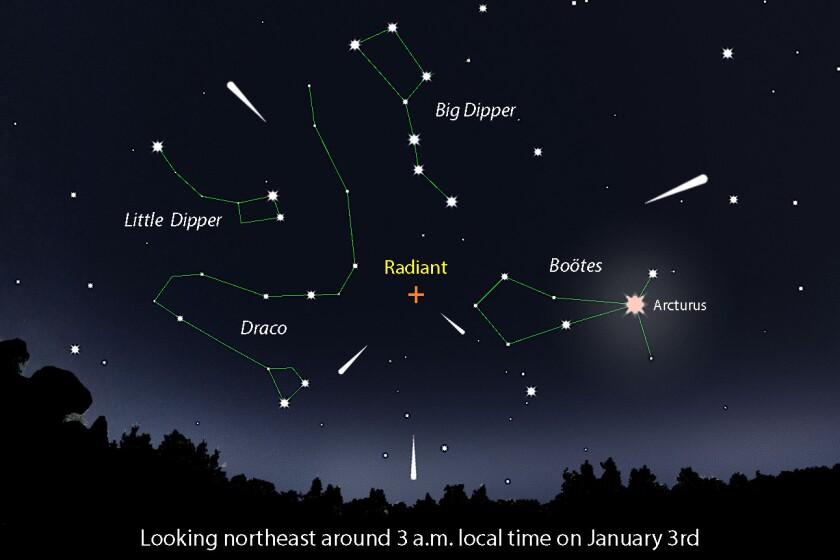
Unlike the better-known Perseids or Geminids, the Quadrantid meteor shower compresses most of its fireballs into a six-hour window, peaking around 4 a.m. local time when the radiant climbs highest. Astronomers trace the dust to asteroid 2003 EH1—possibly a dead comet—whose debris slams Earth’s atmosphere at 41 km/s, vaporizing into bright, ionized trails.
"If you blink, you’ve missed half the show," says Dr. Elena Vance of the Lowell Observatory. "But catch the peak and you’ll see 60–120 meteors an hour, many with a signature emerald hue."
Best Spots to Watch This Week
- North America: Rural areas east of the Rockies, away from January’s persistent cloud belts.
- Europe: Southern Spain and Portugal, where clear skies coincide with the 07:00 UTC peak.
- Backyard hack: Face northeast, recline in a lawn chair, and give eyes 20 minutes to dark-adapt—no gear required.
What Comes Next in 2025
The Quadrantids are merely the opening chord. April brings the Lyrids, then the Eta Aquariids in May. But for speed and spectacle, nothing in the first quarter rivals tonight’s brief, brilliant flurry. Set the alarm; the cosmos is lighting the fuse on a new year.