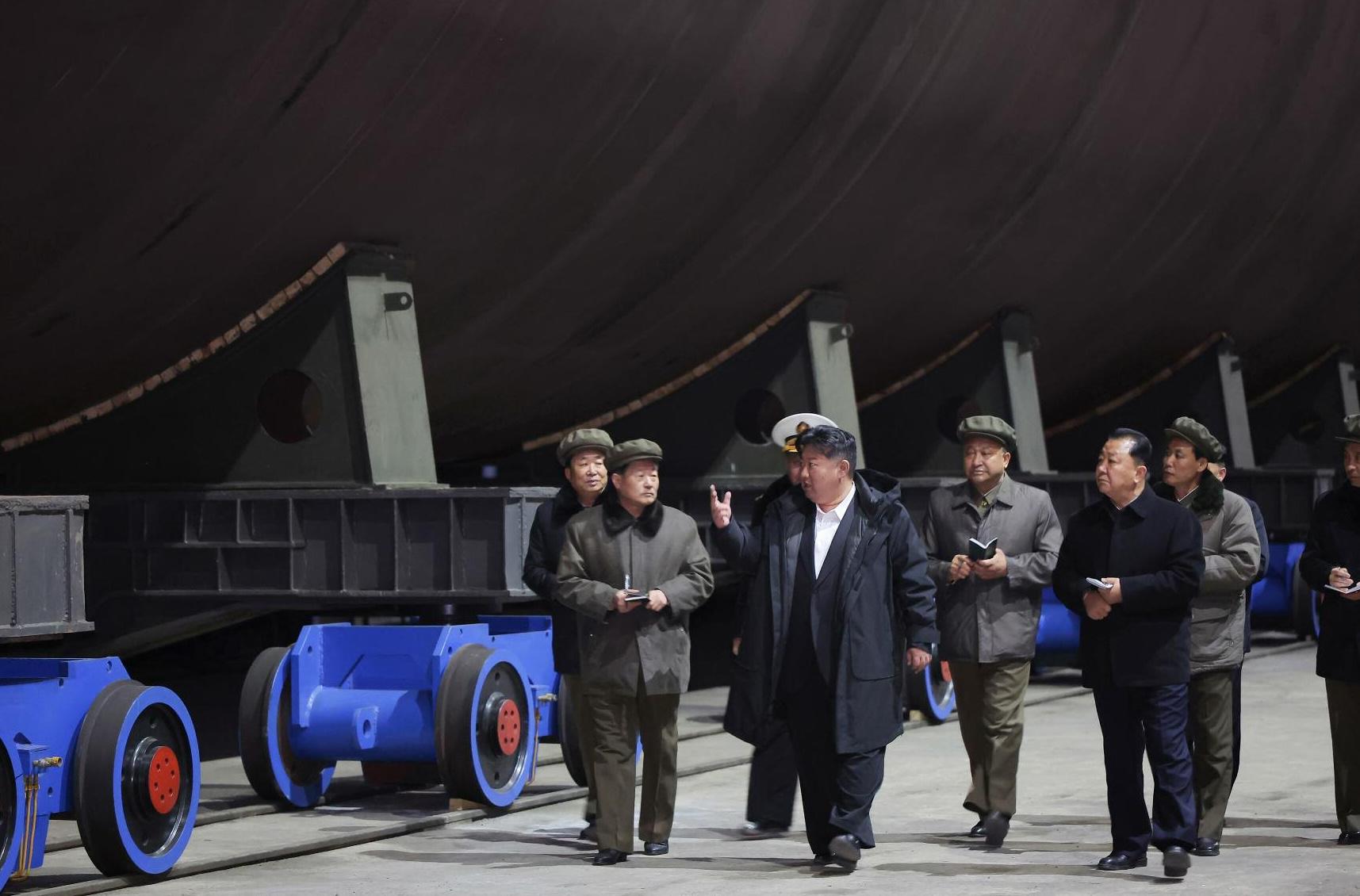
North Korea Unveils Nuclear Submarine: Photos Ignite Global Debate
Pyongyang releases photos of what it claims is its first nuclear-powered submarine, sparking global alarm and skepticism.
A First Look at Pyongyang’s Underwater Gambit
SEOUL—The first photograph arrived on the Telegram channel of a Seoul-based monitor at 03:07 local time: a black-hulled leviathan, its sail bristling with what analysts say could be missile tubes, gliding beneath a North Korean flag. Within minutes the same image flooded South Korean newsrooms, then the world. Pyongyang, long dismissed as technologically isolated, had just declared it had joined the elite club of nations operating nuclear-powered submarines.
What the Images Actually Show
Three stills and a 42-second video, all undated, were released by the state-run Korean Central News Agency late Tuesday. The footage shows a submarine roughly 100 metres in length—smaller than U.S. or Chinese boats but larger than North Korea’s conventionally powered Gorae-class. The hull number “812” is visible; analysts note the sequence matches Kim Jong-un’s earlier promise to field a “nuclear-powered vessel before 2025.”
“If the reactor is real, this isn’t just a propaganda coup—it’s a strategic earthquake,” says Moon Seok-hyeon, a former South Korean navy commodore.
Why Nuclear Propulsion Matters
Diesel-electric boats must surface every few days to recharge batteries, exposing them to radar and satellites. A nuclear reactor, by contrast, lets a submarine stay submerged for months, circling the globe undetected and, in theory, parking off any coastline with ballistic missiles. For Pyongyang, whose land-based launch sites are increasingly monitored, that stealth is priceless.
Skepticism Beneath the Hype
Western engineers point to tell-tale gaps. The sail lacks the cooling vents typical of pressurised-water reactors. Satellite imagery from March shows no associated shore-side reactor testing facility. And the Kim regime has yet to demonstrate a reliable submarine-launched ballistic missile (SLBM) with true intercontinental range.
- No independent verification of onboard reactor
- No public propulsion test data
- Missile compartment appears too small for ICBMs
Regional Fallout
Japan’s defence minister immediately called the development “unacceptable,” while South Korea’s Joint Chiefs vowed “a decisive response.” Washington convened an emergency trilateral call with Seoul and Tokyo, pledging “extended deterrence.” Markets reacted: Korean shipbuilder stocks rose 4 % on speculation of expanded anti-submarine budgets.
The Human Angle
In the port city of Wonsan, where the submarine was reportedly built, residents have been under 24-hour curfew for weeks. A fisherman who asked to remain anonymous told NK News he saw “lights on the water every night” and heard “a deep humming that rattled my boat.”
What Happens Next
Intelligence agencies now race to sniff the air for krypton-85, a gas emitted by nuclear fuel reprocessing. Meanwhile, Pyongyang watchers expect Kim Jong-un to showcase the boat at an April military parade, timing the reveal to coincide with South Korea’s legislative elections. Whether the submarine is a hollow shell or a genuine strategic leap, one thing is clear: the underwater chessboard of Northeast Asia just gained a new, unpredictable piece.