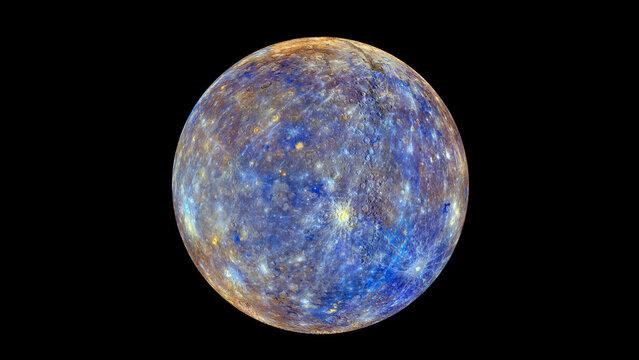
Mercury: The Planet That Shouldn’t Exist
Fresh data from the upcoming BepiColombo mission suggests Mercury’s oversized iron core defies planetary formation models, forcing scientists to rethink how close-in worlds are built.
The Impossible Neighbor
From the moment sunlight strikes its scorched plains, Mercury looks every inch the survivor. Yet a growing chorus of planetary scientists now insists the smallest world in our solar system should never have been born at all.
A Planet Out of Place
"Mercury’s density is off the charts," says Dr. Camila Rojas of the University of Madrid. "It’s as if a cannonball formed where cotton candy should." The new BBC Horizon film, The Planet That Shouldn’t Exist, tracks her team’s analysis of data from the BepiColombo mission, due to slip into orbit in 2025. Their early findings suggest Mercury’s iron core occupies 85 % of the planet’s radius—far larger than any rocky world has a right to be.
"If current models are correct, Mercury is the statistical equivalent of a coin landing on its edge a thousand times in a row."
— Dr. Camila Rojas, Planetary Geochemist
Rewriting the Recipe for Worlds
Classical theory says the infant Sun’s heat should have vaporized lightweight elements near its furnace, leaving only metals so close in. But Mercury’s surface is speckled with potassium and sulfur—elements that should have boiled away. Rojas’ group offers two dramatic solutions:
- A rogue giant embryo, half Mars-size, smashed into a larger proto-Mercury, stripping the silicate mantle and leaving the dense core.
- Mercury formed much farther out, beyond Mars, and migrated inward during the solar system’s first 100 million years.
Either scenario forces modelers to rip up the neat mantra that planets stay where they condense.
What BepiColombo Hopes to Find
When the joint European-Japanese craft finally brakes into orbit, its twin orbiters will map gravity anomalies down to 20 km resolution. "We’re hunting for chemical ghosts—zones where impact debris re-accreted," explains mission scientist Dr. James Lin. Confirmation could rewrite the timeline of planetary migration across the galaxy.
The Stakes Beyond Mercury
If Mercury truly is an outlier, every exoplanet census may need recalibrating. Worlds once dismissed as impossible could lurk in the glare of distant suns, waiting for their own improbable stories to surface.