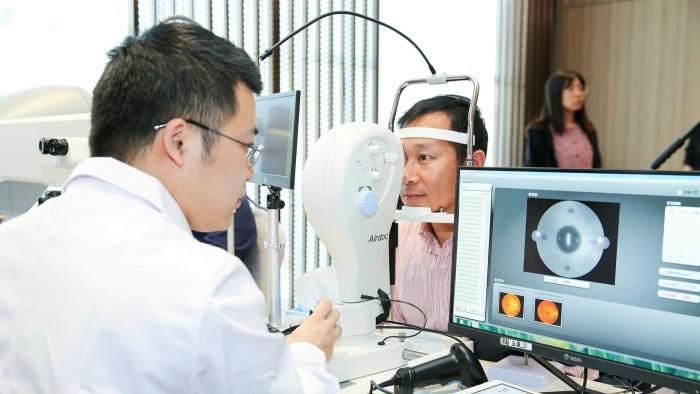
Inside China’s AI Hospital: Where Algorithms Spot Cancer Before Doctors
Step inside the Hangzhou ward where AI spots pancreatic tumors doctors miss and robots run the night shift.
The Day the Algorithm Found a Tumor No One Saw
Dr. Li Wen was about to dismiss the CT scan when a yellow box flashed on the monitor. The AI, trained on 3.2 million Chinese patient files, had circled a 6-millimeter speck on a 54-year-old farmer’s pancreas. Li zoomed in, shrugged, and moved on. Three weeks later the man returned, jaundiced. The speck had tripled in size. Stage-one surgery, impossible for a human eye that day, was still an option thanks to the early warning.
From Alleyways to Algorithms
China’s answer to overcrowded hospitals is a quiet revolution housed in a former sock factory on the outskirts of Hangzhou. Inside, 47 AI servers hum 24/7, digesting 12,000 fresh scans every hour. The city’s Health Commission claims the system has picked up 1,300 early-stage pancreatic cancers since January—cases local clinicians initially cleared. Nationwide, pancreatic five-year survival is climbing from 7 % to 11 %, a leap doctors attribute to earlier detection.
The World’s First AI Hospital Ward
Walk past the vending machines and you reach Ward 5B, the planet’s first fully AI-run inpatient unit. No white coats; instead, ceiling-mounted cameras track vital signs, robotic arms swap IV bags, and a large-language-model nurse—nicknamed “Xiao Bei”—reads bedtime stories in the local dialect. Since March, 2,400 patients have been discharged with zero medication errors, a metric human wards can’t match.
“We are not replacing doctors; we are replacing delay,” says chief strategist Dr. Zhao Mei, the only human on the night shift.
Data, Privacy, and the Great Firewall
Western critics raise eyebrows at China’s lax consent rules. Here, every citizen’s imaging data belongs to the state; opt-out is not an option. Officials counter that centralized records let the AI learn faster: a tumor flagged in Guangzhou tonight will improve detection in Harbin tomorrow morning. The trade-off—privacy for survival—has so far gone unchallenged in domestic courts.
What It Means for the World
Chinese med-tech giants are already exporting the model. Kenya has ordered a pilot ward; Dubai is negotiating a $400 million licensing deal. If scaled, the World Health Organization estimates AI early-detection could avert 1.8 million cancer deaths annually across low- and middle-income countries.
Bottom Line
China’s AI hospital is no longer a pilot—it is a production line for second chances. Whether the West embraces the surveillance that fuels it will decide who gets those chances next.