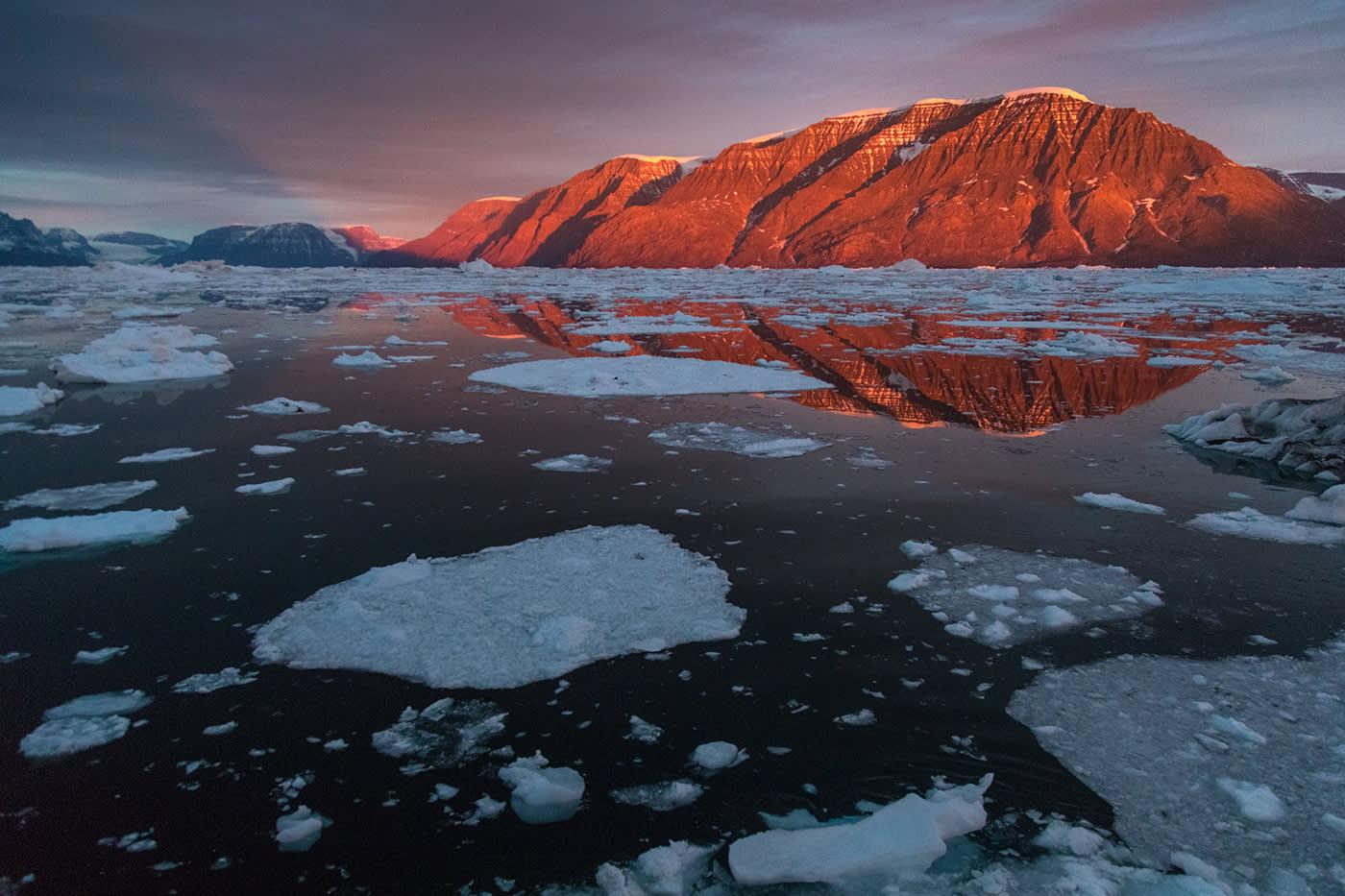
Europe's Greenland Gambit: A New Era of Geopolitics
Discover how the Greenland crisis is reshaping Europe's relationship with the US and redefining global alliances in the 21st century.
Imagine a world where the icy landscapes of Greenland become the linchpin in a global game of power and diplomacy. It sounds like the plot of a Cold War espionage novel, but this is the stark reality facing Europe today as it reevaluates its relationship with the US in the wake of the Greenland crisis.
Greenland: The Unlikely Catalyst for Change
The notion that Greenland, with its sparse population and vast, untouched wilderness, could become a point of contention between global superpowers may seem absurd at first glance. However, the recent actions of the Trump administration have laid bare the strategic importance of this Arctic territory, not just for the US but for Europe as well. As Dr. Helena Jonsdottir, a leading expert on Arctic geopolitics, notes,
"The Arctic region is undergoing significant transformations due to climate change, opening up new shipping lanes and access to natural resources. Greenland is at the heart of this shift, and its strategic value cannot be overstated."
Historical Context: A Complex Web of Interests
Historically, Greenland has been under Danish jurisdiction, but its autonomy has been increasing over the years. The US interest in Greenland, however, predates the current administration. The strategic location of Greenland allows for the monitoring of the North Atlantic and the Russian Arctic region, making it a crucial asset for any global power seeking to expand its influence.
Implications for Europe: A Call to Action
The Greenland crisis has prompted Europe to reflect on its transatlantic alliance. With some suggesting that the EU should stand up to Trump, the question on everyone's mind is: What does this mean for European foreign policy and its future relations with the US? Professor Luca Ferrari, an EU policy analyst, suggests,
"This is a moment of truth for the EU. It must decide whether to assert its sovereignty and potentially risk relations with the US or continue down a path that may undermine its own interests and values."
Redefining Alliances in the 21st Century
The world is witnessing a significant shift in global alliances. The rise of China and the assertive stance of Russia have created a complex geopolitical landscape. In this context, Europe's response to the Greenland crisis will set a precedent for how it navigates these challenging waters in the future. As noted by diplomat Alexander Petrov,
"The Greenland crisis isn't just about real estate; it's about the principles of international relations and the future of global governance."
Economic and Environmental Dimensions
Beyond the political ramifications, the Greenland crisis also has significant economic and environmental implications. The melting of the Arctic ice cap due to climate change has opened up new possibilities for resource extraction and shipping. However, these activities come with enormous environmental costs and raise ethical questions about the exploitation of indigenous lands. According to environmentalist Maya Singh,
"The rush for resources in the Arctic must be balanced against the need to preserve this fragile ecosystem. The future of our planet depends on responsible stewardship, not reckless exploitation."
Towards a Sustainable and Equitable Future
The path forward involves not just political will but a deep understanding of the interconnectedness of our global challenges. The response to the Greenland crisis can set a model for how the international community addresses issues of sovereignty, climate change, and economic development. It's a chance for Europe to lead, not just follow, in crafting a new era of global cooperation and sustainability.
Why This Shifts the Global Paradigm
The Greenland crisis is more than a simple territorial dispute; it represents a turning point in global politics. The decisions made now will influence the course of international relations, environmental policies, and economic strategies for decades to come. As we stand at this crossroads, it's crucial to reflect on what kind of world we want to build. Will it be a world of competition and exploitation, or one of cooperation and preservation? The choice is ours, and the clock is ticking.
As the dust settles on the Greenland crisis, one thing is clear: the status quo is no longer an option. The future demands bold action, visionary leadership, and a commitment to the values that have always defined us as a global community. In this moment of reckoning, let us choose a path that leads not to division and strife, but to a brighter, more sustainable future for all.