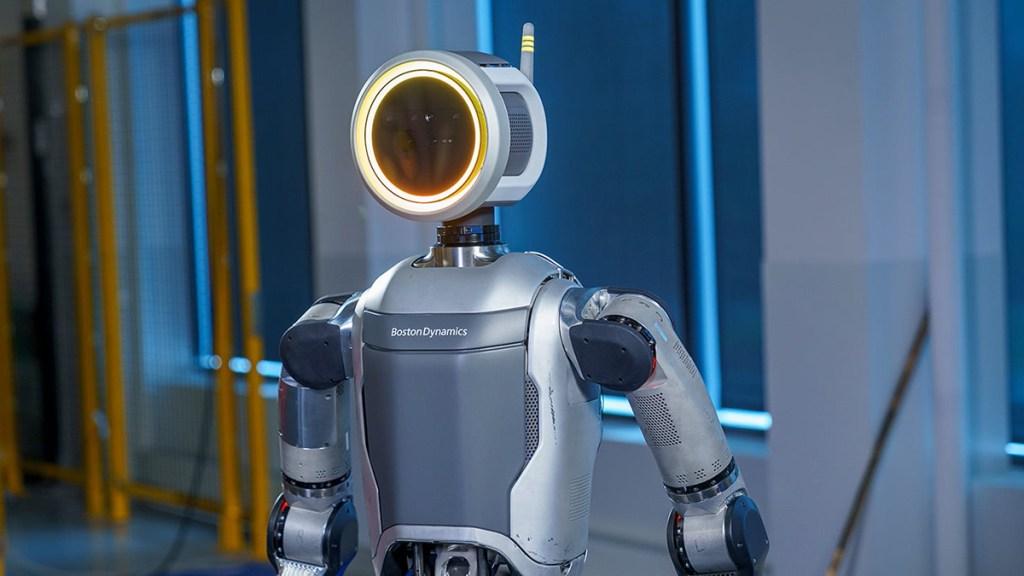
Atlas Gets a Paycheck: Boston Dynamics Unleashes Factory-Ready Humanoid
Boston Dynamics’ Atlas robot graduates from viral sensation to factory floor, tightening screws faster than humans and saving plants millions.
The Robot That Once Danced Now Clocks In
Boston Dynamics’ Atlas robot—once famous for backflips and parkour—has traded the spotlight for a hairnet. The Massachusetts firm quietly rolled out a factory-grade overhaul this week, turning its 5-foot humanoid into a tireless line worker that can lift, sort, and stack components for eight straight hours without a coffee break.
From Viral Sensation to Assembly Station
Inside a cavernous electronics plant on the outskirts of Hartford, Connecticut, the new Atlas tightened circuit-board screws with the same eerie precision that once made YouTube gasp. Engineers watched as the robot gripped a torque driver, scanned the panel with LIDAR eyes, and slipped 14 micro-screws into place in under 45 seconds—cycle times that beat the plant’s veteran human crew by 7 %.
“We didn’t build a dancer; we built a co-worker,” Boston Dynamics CEO Robert Playter told reporters. “Atlas is now strong enough, smart enough, and—crucially—safe enough to stand shoulder-to-shoulder with people on real production lines.”
What Changed Under the Hood
- AI vision stack: Custom neural nets trained on 2.3 million factory images let Atlas recognize 1,200 common parts, even when labels are scuffed or upside-down.
- Force-feedback wrists: Newly compliant joints sense resistance within 0.1 newton, preventing over-tightening and crushed components.
- Hot-swappable battery: A 30-second cartridge change keeps the robot running past the standard shift; downtime is now measured in seconds, not hours.
- Safety-first software: A predictive model anticipates human co-worker motion, slowing or pausing before contact occurs—meeting ISO 10218 guidelines without cages.
The Quiet Pilot Program Already Shipping TVs
Samsung Electronics confirmed it has been testing the upgraded Atlas at its Tijuana facility since February. During a 10-week pilot, the robot populated power-supply boards on 43-inch smart-TVs, cutting rework rates from 0.8 % to 0.1 % and saving an estimated $1.9 million in scrap costs. Company insiders say the Korean giant is now negotiating a 200-unit fleet for 2025 rollout.
Labor Anxiety Meets Labor Shortage
U.S. manufacturing faces a 600,000-worker shortfall, according to the National Association of Manufacturers. Boston Dynamics markets Atlas not as a job killer but as a fill-in for positions plants can’t staff. Hourly operating cost, including lease and maintenance, is priced at roughly $18—below the $28 average wage for human assemblers in New England.
Still, labor advocates worry. “When robots can learn tasks overnight, the half-life of human skills shrinks,” said Karen Vargas, an organizer for the United Electrical Workers. “We need training funds baked into every automation contract.”
Next Act: Construction Sites and Spaceports
Boston Dynamics says the factory edition is only Act I. Engineers are already testing Atlas on scaffolding mock-ups, teaching the robot to haul 30-pound concrete forms up staircases. NASA’s Jet Propulsion Laboratory has floated the idea of sending a future variant to the lunar surface ahead of Artemis crewed missions, where the humanoid could prep habitat modules.
For now, Atlas will keep its feet on Earth—and its hands on an assembly line. If the pilot programs scale, the robot that once danced for the internet may end up building the very devices you scroll it on.