Amid Missile Fire, Seoul’s Leader Lands in Beijing to Reaffirm One-China Pledge
President Lee Jae-hyun lands in Beijing hours after Pyongyang’s missile test, balancing security fears against China’s economic clout.
A tense arrival
Seoul—Air Force One’s wheels kissed the tarmac at Beijing Capital International on a gray Monday morning, just 18 hours after North Korean projectiles splashed into the East Sea. Inside the cabin, President Lee Jae-hyun loosened his seat belt and glanced at the muted television still looping footage of the launches. The message from Pyongyang was unmistakable; the timing, impossible to ignore.
The One-China card
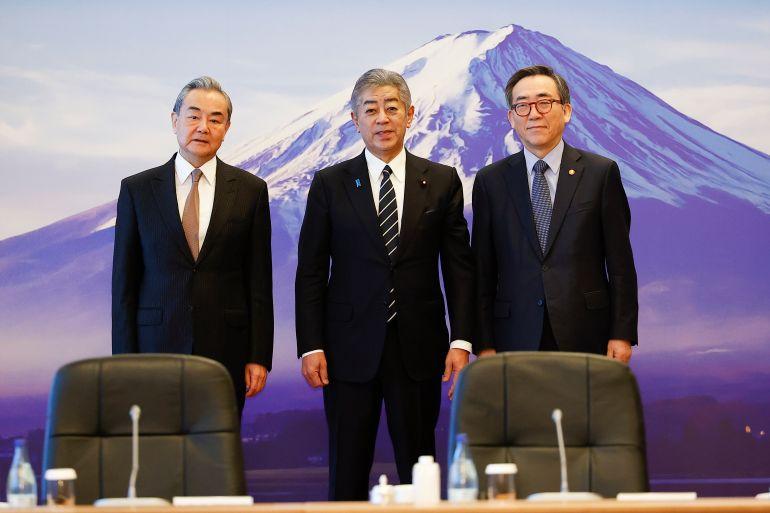
Minutes after descending the jet stairs, Lee stood beside Chinese Foreign Minister Wang Yi and uttered the phrase every diplomat in the region was waiting to hear: “South Korea respects the One-China principle.” The affirmation, delivered in crisp Mandarin, drew a thin smile from Wang and a flurry of camera shutters. In the calculus of Northeast Asia, it was the admission ticket to serious trade talk.
“We seek stability, not sides,” Lee told reporters, coat collar turned up against the Beijing wind. “But stability requires clarity, and clarity begins with acknowledging China’s core interests.”
What Seoul wants
Behind closed doors, the South Korean delegation handed over a wish list:
- Resumption of group tourism that China froze in 2017 after Seoul deployed a U.S. missile shield
- A green light for Korean battery makers to expand plants in Jiangsu and Shaanxi
- Quiet cooperation on supply-chain monitoring for critical minerals
Chinese officials, according to two people briefed on the talks, countered with a request: Seoul must avoid further public criticism of Chinese military drills around Taiwan. Lee’s aides said the president neither accepted nor rejected the demand, opting instead to “note” it.
Missiles and messaging
North Korea’s Sunday salvo—two short-range ballistic missiles flying 600 km—was timed to coincide with Lee’s departure. Analysts in Seoul say Pyongyang is reminding both Beijing and Washington that peninsular diplomacy cannot proceed without accounting for Kim Jong-un’s arsenal. Chinese state media downplayed the launches, relegating them to page-four briefs, a courtesy Beijing rarely extends when U.S. allies conduct exercises.
Echoes of 2017
Veteran diplomats remember the last time a South Korean leader arrived in Beijing under a missile shadow. In 2017, former President Moon Jae-in landed days after North Korea’s sixth nuclear test, hoping to convince Xi Jinping to cut oil flows to the North. Xi offered moral support but no concrete sanctions relief. This time, Seoul’s ask is economic, not strategic—an indication of how profoundly the China-South Korea relationship has shifted from security to commerce.
Business, not banners
On Wangfujing Street, Korean cosmetics pop-ups have already begun restocking duty-free shelves in anticipation of tourist traffic. Shares of AmorePacific, South Korea’s largest cosmetics firm, jumped 4.2 % on the Seoul exchange Monday. Meanwhile, Chinese lithium suppliers saw modest gains as investors bet on renewed Korean battery demand.
What next?
Lee’s three-day itinerary includes a banquet at the Great Hall of the People and a symbolic tour of the Forbidden City—Beijing’s way of signaling respect. Yet the real action will unfold in a secure conference room where both sides must decide whether the One-China statement is merely rhetorical or the first brick in a new economic bridge.
As motorcades idled outside, one western diplomat watching the choreography offered a sober assessment: “In this neighborhood, missiles launch, statements are made, and the caravan moves on. The question is who’s still standing when the dust settles.”