7-Million-Year-Old Ape Could Rewrite Human Origins, New Bone Study Claims
Fresh analysis of a 7-million-year-old thigh bone suggests the ape-like Sahelanthropus walked upright, potentially making it our earliest known ancestor.
A fossil that spent 20 years in a lab drawer is now shaking the human family tree
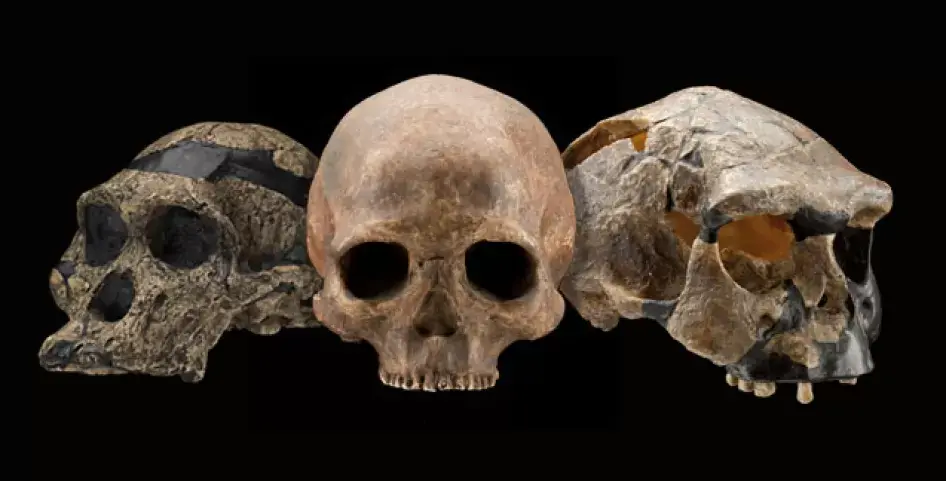
SAHELANTHROPUS TCHADENSIS was never supposed to be this disruptive. When French paleontologist Michel Brunet first spotted the battered skull poking out of Chad’s wind-scoured desert in 2001, colleagues hailed the 7-million-year-old find as a possible “first human.” Then the doubts crept in. Crushed nasal bones, a distorted braincase, and—crucially—no femur to prove upright walking left many wondering whether Sahelanthropus was just an odd-looking ape.
The femur that changed everything
That changed last week. In the journal Nature Communications, Brunet’s team released 3-D scans of a thigh fragment recovered alongside the skull. Using micro-CT imaging normally reserved for cancer diagnostics, researchers measured the neck-shaft angle—a tell-tale marker of bipedalism. The angle, they report, falls squarely within the human range, not the chimp-like spectrum. “We kept the bone in a safe because we feared destroying it,” Brunet told reporters in Paris. “Now the data say what we hoped: this creature walked on two legs.”
‘If the femur is truly associated with the skull, we may have to push the origin of hominins back by at least a million years.’
— Dr. Zeray Alemseged, University of Chicago, not involved in the study
Why some experts still aren’t buying it
Skeptics point to the fossil’s muddy provenance. The thigh piece was found scattered among camel thorns, 15 meters from the skull, and never sealed in the same sediment layer. “Extraordinary claims need airtight context,” says Dr. Jessica Thompson of Yale. She notes that similar shaft angles appear in late Miocene apes that clearly knuckle-walked. Others worry the published sample size—one partial femur—can’t bear the evolutionary weight placed on it.
What this means for the ‘Out of Africa’ story
Geneticists have long argued humans and chimps split 5 to 7 million years ago. A bipedal Sahelanthropus would shove that divergence toward the older end, implying hominins evolved in a green, Sahara-crossing corridor we barely suspected. The find also compresses the timeline for the last common ancestor, suggesting our lineage experimented with upright walking while still retaining ape-like climbing shoulders.
Next steps: dig, date, and DNA
Brunet is already back in Chad’s Djurab Desert hunting limb bones to match the skull. Meanwhile, European synchrotron labs will probe the femur’s growth lines this summer, hunting for confirmation it belonged to an adult male who stood about four feet tall. If further fossils converge on the same conclusion, textbooks may soon redraw the first step on the human path—an upright stride taken seven million years ago under a very different African sky.