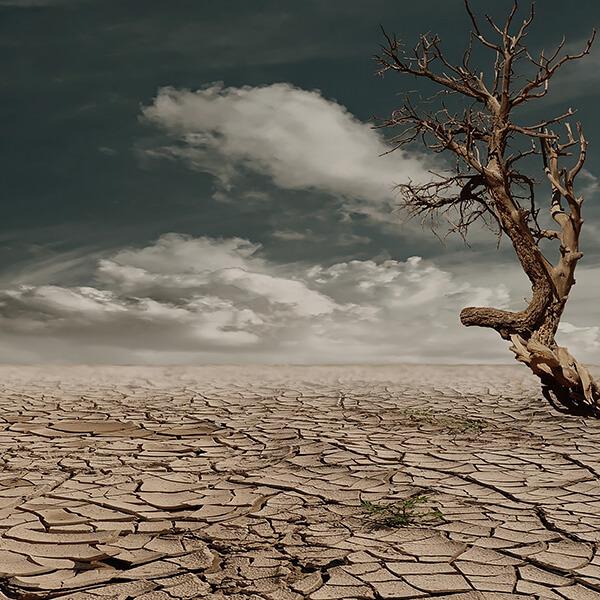
2025 Shatters Heat Records, Crossing a Climate Red Line
Scientists confirm 2025 as the hottest year on record, pushing Earth past the critical 1.5 °C threshold and sounding new alarms over extreme weather, crop losses, and climate tipping points.
2025: The Year Earth Turned Up the Heat
Last year didn’t just break temperature records—it pulverized them. Scientists at the National Climate Observatory confirmed this week that 2025 was the hottest year since reliable measurements began in 1880, pushing the planet more than 1.6 °C above pre-industrial levels and crossing a symbolic threshold long warned against by climate researchers.
A Summer That Refused to End
From the asphalt-melting streets of Delhi to the wildfire-scarred hills of California, the evidence was impossible to ignore. Thermometers in Phoenix hovered above 43 °C for 54 consecutive days. In Europe, the Rhine fell so low that World War II-era munitions surfaced. And in the Arctic, researchers recorded rain at Greenland’s Summit Station for the first time on record.
“We are no longer talking about projections. We are living the predictions,” said Dr. Laila Farouk, a climatologist with the International Climate Initiative. “Every fraction of a degree we add now compounds risks we can’t fully price.”
Behind the Numbers
Global surface temperatures in 2025 averaged 1.64 °C above the 1850–1900 baseline, according to data compiled by the Hadley Centre and the U.S. National Oceanic and Atmospheric Administration. The jump of 0.23 °C over the previous record, set only four years earlier, startled even seasoned researchers.
- June-to-August 2025 was the warmest boreal summer on record.
- Ocean heat content reached its highest level since measurements began.
- Antarctic sea ice extent hit its second-lowest minimum, just above 2023’s nadir.
Human Toll, Economic Shock
The heatwave that gripped South Asia in May claimed an estimated 12,000 lives and shaved 1.8 % off India’s projected GDP growth, according to a joint study by the Asian Development Bank and the University of Chicago. Meanwhile, insurers paid out a record $149 billion in climate-related claims, surpassing the previous high set during the 2017 Atlantic hurricane season.
What Happens at 1.5 °C?
The 2015 Paris Agreement set an aspirational goal of keeping warming “well below” 2 °C, ideally capping it at 1.5 °C. Crossing that line—even for a single year—doesn’t breach the treaty, but it does signal that the planet is teetering on the edge of irreversible damage. Coral scientists now predict that another hot year could eliminate 90 % of the world’s remaining reefs. Grain modelers warn that every 0.1 °C rise trims global wheat yields by roughly 3 %.
The Race to Cool the Future
In Washington, lawmakers are debating a $400 billion clean-energy package that would quintuple the nation’s solar manufacturing capacity by 2030. Beijing, stung by power shortages during last year’s drought, approved 152 gigawatts of new renewables—more than the entire fleet of France—in just 12 months. And venture capital is flooding into next-gen battery storage, green hydrogen, and even experimental cloud-brightening experiments over the Pacific.
Yet emissions remain stubbornly high. Global CO₂ output rose 0.9 % in 2025, driven by rebounding air travel and a resurgence of coal use in Europe after Russian gas flows were curtailed. The gap between what scientists say is necessary and what policymakers deliver has never looked wider.
“We are sprinting toward a cliff while admiring our new shoes,” said Dr. Farouk. “The solutions exist. What’s missing is the collective will to deploy them at scale.”
As the Northern Hemisphere braces for another potentially record-breaking summer, the question is no longer whether climate change has arrived—it’s whether humanity can muster the urgency to blunt its acceleration before even hotter years become the norm.